



InFoMM Core Team
Director: Prof Colin Please
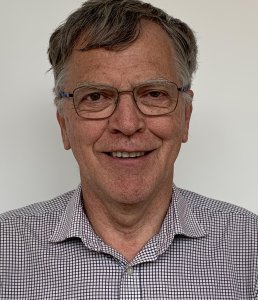
Colin Please is Professor of Applied Mathematics and co-Director of InFoMM. He works on the mathematical modelling of physical phenomena arising in practical problems and interpreting the results into the original context His research takes place at the interface of mathematics with other disciplines primarily engineering, and bio-science. He develops mathematical models primarily using partial differential equations employing asymptotic methods and numerical methods to understand the resulting behaviour.
Director: Prof Chris Breward
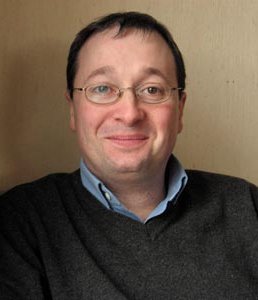
Chris Breward is the Associate Director at the Oxford Centre for Collaborative Applied Mathematics and co-Director of InFoMM. His current research includes the mathematical modelling of fluid mechanical, industrial and medical problems. Recent problems in these areas include tear film dynamics, organic photovoltaics, surfactant-driven flows and other thin-film flows. Discover more about these on his research page.
Administrator: Sophie Hurden
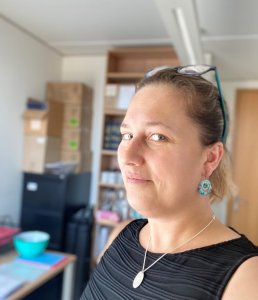
Sophie Hurden has worked in Higher Education administration since 2007. From 2010 to 2018 she worked for Oxford University in a number of roles in Undergraduate Admissions, Student Funding and Degree Conferrals, taking a short career break before returning to the University in this role in December 2020.