

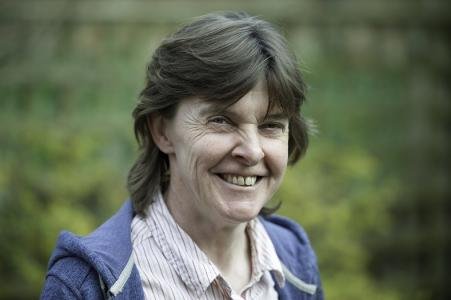
Alison Etheridge has been awarded the Ulf Grenander Prize in Stochastic Theory and Modeling by The American Mathematical Society for pioneering contributions to measure-valued branching processes, population genetics, and the interplay between these fields, including innovative population genetics models for structured populations.
In the words of the citation: ' Professor Etheridge's work is distinguished by exceptional mathematical depth, originality, and breadth. Her research draws on infinite-dimensional stochastic processes and their applications, with particular emphasis on mathematical problems arising in population genetics. The impact of these contributions is reflected not only in their influence on probability and population genetics, but also in the vibrant international research community they have inspired. The breadth of her contributions is further illustrated by the topics of her four books, which range from the history of financial mathematics to mathematical modelling in population genetics.'
Alison Etheridge is Professor of Probability in the University of Oxford. She has held positions in Oxford, Cambridge, UC Berkeley, Edinburgh, and Queen Mary University of London before returning to Oxford in 1997. She is a Fellow of the Royal Society of London and an International Honorary Member of the American Academy of Arts and Sciences. In Oxford she has served as Head of the Department of Statistics and in senior administrative roles in the Mathematical, Physical, and Life Sciences Division. Beyond Oxford, her service has included leadership roles in the Royal Society and the Engineering and Physical Sciences Research Council. She is currently President of the Academy for the Mathematical Sciences in the UK. Her honours include appointment as Dame Commander of the Order of the British Empire.
Alison said: 'I am deeply honoured to receive the 2027 Ulf Grenander Prize in Stochastic Theory and Modelling. In doing so I’d like to pay tribute to the remarkable collection of students and other collaborators with whom I have worked. As I write this, we are seeing a scientific revolution driven by artificial intelligence. There are huge opportunities to leverage this astonishing new tool, but for now, the role of the mathematician in working with domain experts to formulate the right question, to choose the most appropriate assumptions and simplifications, and to interpret and validate results remains undiminished.'
The Ulf Grenander Prize in Stochastic Theory and Modeling recognises exceptional theoretical and applied contributions in stochastic theory and modelling. The prize was established in 2016 and is awarded every three years.