

NNLO QCD corrections to associated W H production and H → b ¯ b decay
Caola, F
Luisoni, G
Melnikov, K
Roentsch, R
Physical Review D
volume 97
issue 7
(23 Apr 2018)
The double-soft integral for an arbitrary angle between hard radiators
Caola, F
Delto, M
Frellesvig, H
Melnikov, K
EUROPEAN PHYSICAL JOURNAL C
volume 78
issue 8
(29 Aug 2018)
http://gateway.webofknowledge.com/gateway/Gateway.cgi?GWVersion=2&SrcApp=PARTNER_APP&SrcAuth=LinksAMR&KeyUT=WOS:000443060900001&DestLinkType=FullRecord&DestApp=ALL_WOS&UsrCustomerID=4fd6f7d59a501f9b8bac2be37914c43e
Bottom-quark effects in Higgs production at intermediate transverse momentum
Caola, F
Lindert, J
Melnikov, K
Monni, P
Tancredi, L
Wever, C
JHEP
volume 09
035-035
(07 Sep 2018)
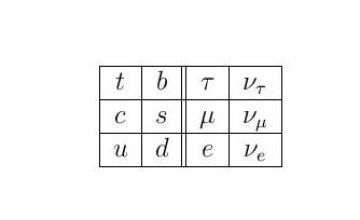
Oxford Mathematician Tsou Sheung Tsun talks about her work on building the Framed Standard Model and the exciting directions it has taken her.
Thu, 07 Mar 2019
12:00
12:00
L4
Characterizations of Besov spaces via ball averages and Bianchini-type norms
Óscar Domínguez Bonilla
(Universidad Complutense de Madrid)
Abstract
Motivated by recent problems on mixing flows, it is useful to characterize Besov spaces via oscillation of functions (averages) and minimization problems for bounded variation functions (Bianchini-type norms). In this talk, we discuss various descriptions of Besov spaces in terms of different kinds of averages, as well as Bianchini-type norms. Our method relies on the K-functional of the theory of real interpolation. This is a joint work with S. Tikhonov (Barcelona).
Thu, 28 Feb 2019
12:00
12:00
L4
A non-linear parabolic PDE with a distributional coefficient and its applications to stochastic analysis
Elena Issolgio
(Leeds University)
Abstract
We consider a non-linear PDE on $\mathbb R^d$ with a distributional coefficient in the non-linear term. The distribution is an element of a Besov space with negative regularity and the non-linearity is of quadratic type in the gradient of the unknown. Under suitable conditions on the parameters we prove local existence and uniqueness of a mild solution to the PDE, and investigate properties like continuity with respect to the initial condition. To conclude we consider an application of the PDE to stochastic analysis, in particular to a class of non-linear backward stochastic differential equations with distributional drivers.
Thu, 21 Feb 2019
12:00
12:00
L4
The relationship between failure of a Liouville type theorem and Type I singularities of the Navier-Stokes equations
Tobias Barker
(École Normale Superieure (DMA))
Abstract
In this talk, we demonstrate that formation of Type I singularities of suitable weak solutions of the Navier-Stokes equations occur if there exists non-zero mild bounded ancient solutions satisfying a 'Type I' decay condition. We will also discuss some new Liouville type Theorems. Joint work with Dallas Albritton (University of Minnesota).
Thu, 14 Feb 2019
12:00
12:00
L4
The nonlinear Schrödinger problem and its connection with Mean Field Games
Giovanni Conforti
(Ecole Polytechnique (CMAP))
Abstract
In this talk, we study the long time behaviour of a cloud of weakly interacting Brownian particles, conditionally on the observation of their initial and final configuration. In particular, we connect this problem, which may be regarded as a nonlinear version of the Schrödinger problem, to the study of the long time behaviour of Mean Field Games. Combining tools from optimal transport and stochastic control we prove convergence towards the equilibrium configuration and establish convergence rates. A key ingredient to derive these results is a new functional inequality, which generalises Talagrand’s inequality to the entropic transportation cost.
Thu, 07 Feb 2019
12:00
12:00
L4
Nonlinear Stein theorem for differential forms
Swarnendu Sil
(ETH Zurich)
Abstract
Stein ($1981$) proved the borderline Sobolev embedding result which states that for $n \geq 2,$ $u \in L^{1}(\mathbb{R}^{n})$ and $\nabla u \in L^{(n,1)}(\mathbb{R}^{n}; \mathbb{R}^{n})$ implies $u$ is continuous. Coupled with standard Calderon-Zygmund estimates for Lorentz spaces, this implies $u \in C^{1}(\mathbb{R}^{n})$ if $\Delta u \in L^{(n,1)}(\mathbb{R}^{n}).$ The search for a nonlinear generalization of this result culminated in the work of Kuusi-Mingione ($2014$), which proves the same result for $p$-Laplacian type systems. \paragraph{} In this talk, we shall discuss how these results can be extended to differential forms. In particular, we can prove that if $u$ is an $\mathbb{R}^{N}$-valued $W^{1,p}_{loc}$ $k$-differential form with $\delta \left( a(x) \lvert du \rvert^{p-2} du \right) \in L^{(n,1)}_{loc}$ in a domain of $\mathbb{R}^{n}$ for $N \geq 1,$ $n \geq 2,$ $0 \leq k \leq n-1, $ $1 < p < \infty, $ with uniformly positive, bounded, Dini continuous scalar function $a$, then $du$ is continuous.