

Preface
Kissinger, A
Coecke, B
Electronic Proceedings in Theoretical Computer Science, EPTCS
volume 266
(27 Feb 2018)
Experimental Biological Protocols with Formal Semantics
Kwiatkowska, M
Cardelli, L
Abate, A
Laurenti, L
Yordanov, B
16th International Conference on Computational Methods in Systems Biology (CMSB 2018)
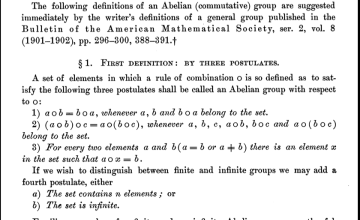
At the beginning of the twentieth century, some minor algebraic investigations grabbed the interest of a small group of American mathematicians. The problems they worked on had little impact at the time, but they may nevertheless have had a subtle effect on the way in which mathematics has been taught over the past century.
Graphical Structures for Design and Verification of Quantum Error Correction
Chancellor, N
Kissinger, A
Roffe, J
Zohren, S
Horsman, D
(23 Nov 2016)
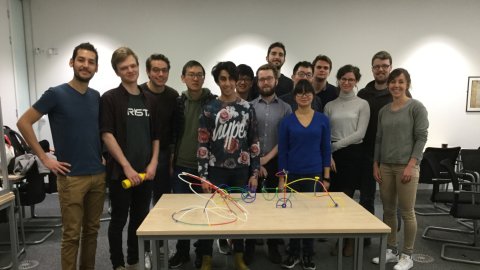
This page has details of the research projects being undertaken by InFoMM Cohort Four.
Fri, 30 Nov 2018
14:00 -
15:00
L3
Minimal switches and clocks
Dr Attila Csikasz-Nagy
(Institute for Mathematical and Molecular Biomedicine King's College London)
Abstract
Switch-like and oscillatory dynamical systems are widely observed in biology. We investigate the simplest biological switch that is composed of a single molecule that can be autocatalytically converted between two opposing activity forms. We test how this simple network can keep its switching behaviour under perturbations in the system. We show that this molecule can work as a robust bistable system, even for alterations in the reactions that drive the switching between various conformations. We propose that this single molecule system could work as a primitive biological sensor and show by steady state analysis of a mathematical model of the system that it could switch between possible states for changes in environmental signals. Particularly, we show that a single molecule phosphorylation-dephosphorylation switch could work as a nucleotide or energy sensor. We also notice that a given set of reductions in the reaction network can lead to the emergence of oscillatory behaviour. We propose that evolution could have converted this switch into a single molecule oscillator, which could have been used as a primitive timekeeper. I will discuss how the structure of the simplest known circadian clock regulatory system, found in cyanobacteria, resembles the proposed single molecule oscillator. Besides, we speculate if such minimal systems could have existed in an RNA world. I will also present how the regulatory network of the cell cycle could have emerged from this system and what are the consequences of this possible evolution from a single antagonistic kinase-phosphatase network.
Fri, 23 Nov 2018
14:00 -
15:00
L3
Mathematical modelling of sleep and (other) daily biological rhythms: light, clocks and social jetlag
Dr Anne Skeldon
(Dept of Mathematics University of Surrey)
Fri, 16 Nov 2018
14:00 -
15:00
L3
In-silico modelling of the tumour microenvironment
Professor Francesca Buffa
(Department of Oncology University of Oxford)
Abstract
Despite progress in understanding many aspects of malignancy, resistance to therapy is still a frequent occurrence. Recognised causes of this resistance include 1) intra-tumour heterogeneity resulting in selection of resistant clones, 2) redundancy and adaptability of gene signalling networks, and 3) a dynamic and protective microenvironment. I will discuss how these aspects influence each other, and then focus on the tumour microenvironment.
The tumour microenvironment comprises a heterogeneous, dynamic and highly interactive system of cancer and stromal cells. One of the key physiological and micro-environmental differences between tumour and normal tissues is the presence of hypoxia, which not only alters cell metabolism but also affects DNA damage repair and induces genomic instability. Moreover, emerging evidence is uncovering the potential role of multiple stroma cell types in protecting the tumour primary niche.
I will discuss our work on in silico cancer models, which is using genomic data from large clinical cohorts of individuals to provide new insights into the role of the tumour microenvironment in cancer progression and response to treatment. I will then discuss how this information can help to improve patient stratification and develop novel therapeutic strategies.