On sets of irreducible polynomials closed by composition
Abstract
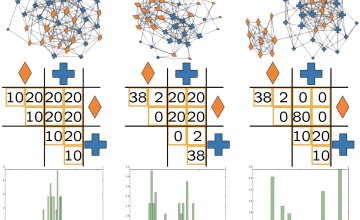
Let S be a set of monic degree 2 polynomials over a finite field and let C be the compositional semigroup generated by S. In this talk we establish a necessary and sufficient condition for C to be consisting entirely of irreducible polynomials. The condition we deduce depends on the finite data encoded in a certain graph uniquely determined by the generating set S. Using this machinery we are able both to show examples of semigroups of irreducible polynomials generated by two degree 2 polynomials and to give some non-existence results for some of these sets in infinitely many prime fields satisfying certain arithmetic conditions (this is a joint work with A.Ferraguti and R.Schnyder). Time permitting, we will also describe how to use character sum techniques to bound the size of the graph determined by the generating set (this is a joint work with D.R. Heath-Brown).
14:00
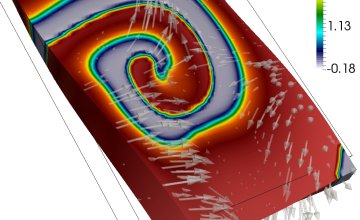
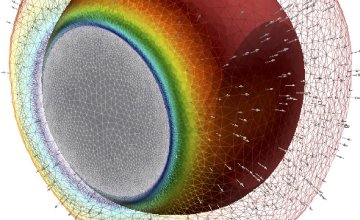
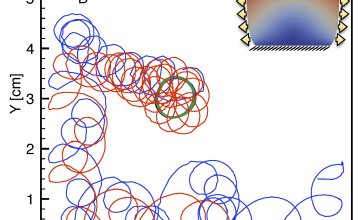
PDE-constrained shape optimization with FEM-tailored discretization of diffeomorphisms
14:00
15:00
Code Based Cryptography using different Metrics
Abstract
Code based Cryptography had its beginning in 1978 when Robert McEliece
demonstrated how the hardness of decoding a general linear code up to
half the minimum distance can be used as the basis for a public key
crypto system. At the time the proposed system was not implemented in
practice as the required public key was relatively large.
With the realization that a quantum computer would make many
practically used systems obsolete coding based systems became an
important research subject in the area of post-quantum cryptography.
In this talk we will provide an overview to the subject.
In addition we will report on recent results where the underlying
code is a disguised Gabidulin code or more generally a subspace
code and where the distance measure is the rank metric respecively the
subspace distance.
In its first five hundred years Oxford University had many fine mathematicians, astronomers and philosophers – from the Merton scholars of the early 14th century to the newly appointed Savilian Professors of Geometry and Astronomy in the 17th century. Indeed some of the most sophisticated mathematical discussions of the Middle Ages took place at Oxford in the 14th century.
Find out more in the latest in our Oxford Mathematics History series.