

A theoretical explanation for the Central Molecular Zone asymmetry
Sormani, M
Tress, R
Ridley, M
Glover, S
Klessen, R
Binney, J
Magorrian, S
Smith, R
Monthly Notices of the Royal Astronomical Society
volume 475
issue 2
2383-2402
(20 Dec 2017)
Fri, 02 Mar 2018
16:00 -
17:00
L1
What's new in moonshine? CANCELLED
Miranda Cheng
(University of Amsterdam.)
Abstract
The so-called moonshine phenomenon relates modular forms and finite group representations. After the celebrated monstrous moonshine, various new examples of moonshine connection have been discovered in recent years. The study of these new moonshine examples has revealed interesting connections to K3 surfaces, arithmetic geometry, and string theory. In this colloquium I will give an overview of these recent developments.
Thu, 08 Mar 2018
16:00
16:00
L6
Permuting F_q using a density method
Giacomo Micheli
(Oxford)
Abstract
The construction of permutation functions of a finite field is a task of great interest in cryptography and coding theory. In this talk we describe a method which combines Chebotarev density theorem with elementary group theory to produce permutation rational functions over a finite field F_q. Our method is entirely constructive and as a corollary we get the classification of permutation polynomials up to degree 4 over any finite field of odd characteristic.
This is a joint work with Andrea Ferraguti.
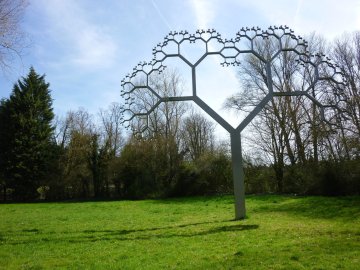
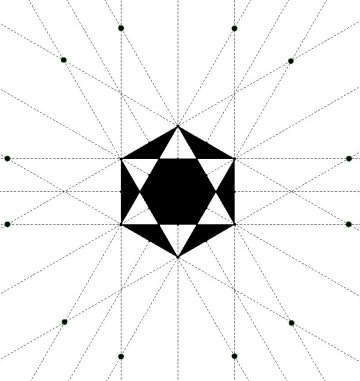
Oxford Mathematician Dan Ciubotaru talks about his recent research in Representation Theory.
Mon, 29 Jan 2018
15:45 -
16:45
L3
The critical threshold for Bargmann-Fock percolation
HUGO VANNEUVILLE
(Universite Lyon 1)
Abstract
Let f be the planar Bargmann-Fock field, i.e. the analytic Gaussian field with covariance kernel exp(-|x-y|^2/2). We compute the critical point for the percolation model induced by the level sets of f. More precisely, we prove that there exists a.s. an unbounded component in {f>p} if and only if p<0. Such a percolation model has been studied recently by Beffara-Gayet and Beliaev-Muirhead. One important aspect of our work is a derivation of a (KKL-type) sharp threshold result for correlated Gaussian variables. The idea to use a KKL-type result to compute a critical point goes back to Bollobás-Riordan. This is joint work with Alejandro Rivera.
Wed, 21 Feb 2018
15:00
15:00
L4
Full orbit sequences in affine spaces
Giacomo Micheli
(University of Oxford)
Abstract
Let n be a positive integer. In this talk we provide a recipe to
construct full orbit sequences in the affine n-dimensional space over a
finite field. For n=1 our construction covers the case of the well
studied pseudorandom number generator ICG.
This is a joint work with Federico Amadio Guidi.
Thu, 22 Mar 2018
09:00 -
Fri, 23 Mar 2018
15:00
5th Oxford International Workshop on Neuron and Brain Mechanics
Various
Abstract
The 5th Oxford Neuron and Brain Mechanics Workshop will take place on 22 and 23 March 2018, in St Hugh’s College, Oxford. The event includes international and UK speakers from a wide variety of disciplines, collectively working on Traumatic Brain Injury, Brain Mechanics and Trauma, and Neurons research.
The aim is to foster new collaborative partnerships and facilitate the dissemination of ideas from researchers in different fields related to the study of brain mechanics, including pathology, injury and healing.
Focussing on a multi-disciplinary and collaborative approach to aspects of brain mechanics research, the workshop will present topics from areas including Medical, Neuroimaging, Neuromechanics and mechanics, Neuroscience, Neurobiology and commercial applications within medicine.
This workshop is the latest in a series of events established by the members of the International Brain Mechanics and Trauma Lab (IBMTL) initiative *(www.brainmech.ox.ac.uk) in collaboration with St Hugh’s College, Oxford.
Speakers
Professor Lee Goldstein MD, Boston University
Professor David Sharp, Imperial College London
Dr Ari Ercole, University of Cambridge
Professor Jochen Guck, BIOTEC Dresden
Dr Elisa Figallo, Finceramica SPA
Dr Mike Jones, Cardiff University
Professor Ellen Kuhl, Stanford University
Mr Tim Lawrence, University of Oxford
Professor Zoltan Molnar, University of Oxford
Dr Fatiha Nothias, University Pierre & Marie Curie
Professor Stam Sotiropoulos, University of Nottingham
Professor Michael Sutcliffe, University of Cambridge
Professor Alain Goriely, University of Oxford
Professor Antoine Jérusalem, University of Oxford
Everybody is welcome to attend but (free) registration is required.
https://www.eventbrite.co.uk/e/5th-oxford-international-workshop-on-neu…
Students and postdocs are invited to exhibit a poster.
For further information on the workshop, or exhibiting a poster, please contact: @email
The workshop is generously supported by the ERC’s ‘Computational Multiscale Neuron Mechanics’ grant (COMUNEM, grant # 306587) and St Hugh’s College, Oxford.
The International Brain Mechanics and Trauma Lab, based in Oxford, is an international collaboration on projects related to brain mechanics and trauma. This multidisciplinary team is motivated by the need to study brain cell and tissue mechanics and its relation with brain functions, diseases or trauma.
Thu, 01 Mar 2018
16:00
16:00
L6
Character varieties and (\varphi_L,\Gamma_L)-modules
Peter Schneider
(Münster)
Abstract
After reviewing old work with Teitelbaum, in which we constructed the character variety X of the additive group o_L in a finite extension L/Q_p and established the Fourier isomorphism for the distribution algebra of o_L, I will briefly report on more recent work with Berger and Xie, in which we establish the theory of (\varphi_L,\Gamma_L)-modules over X and relate it to Galois representations. Then I will discuss an ongoing project with Venjakob. Our goal is to use this theory over X for Iwasawa theory.
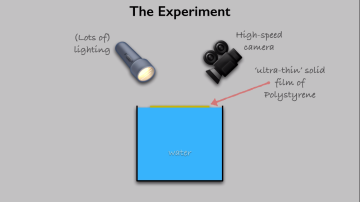
Oxford Mathematicians Dominic Vella and Finn Box together with colleague Alfonso Castrejón-Pita from Engineering Science in Oxford and Maxime Inizan from MIT have won the annual video competition run by the UK Fluids Network. Here they describe their work and the film.