Tue, 28 May 2019

12:00 - 13:15
L4

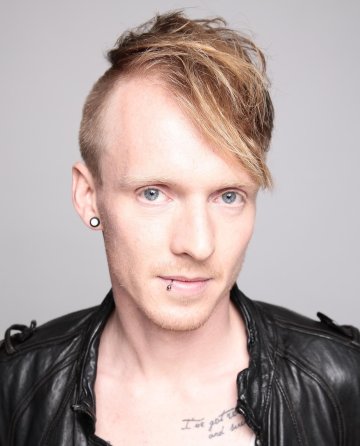
The Swampland, Holography and the Large Volume Scenario

Joseph Conlon
(Oxford)
Abstract

String compactifications are essential for connecting string theory to low energy particle physics and cosmology. Moduli stabilisation gives rise to effective Lagrangians that capture the low-energy degrees of freedom. Much recent interest has been on swampland consistency conditions on such effective
field theories - which low energy Lagrangians can arise from quantum gravity? Furthermore, given that moduli stabilisation scenarios often exist in AdS space, we can also ask: what do swampland conditions mean in the context of AdS/CFT? I describe work on developing a holographic understanding of moduli stabilisation and swampland consistency conditions. I focus in particular on the Large Volume Scenario, which is especially appealing from a holographic perspective as in the large volume limit all its interactions can be expressed solely in terms of the AdS radius, with no free dimensionless parameters.

 

Tue, 14 May 2019

12:00 - 13:15
L4

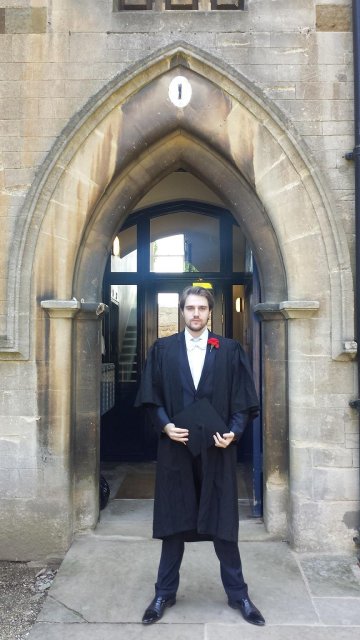
Local operators in integrable quantum field theories

Henning Bostelmann
(York)
Abstract


Integrable models provide simplified examples of quantum field theories with self-interaction. As often in relativistic quantum theory, their local observables are difficult to control mathematically. One either tries to construct pointlike local quantum fields, leading to possibly divergent series expansions, or one defines the local observables indirectly via wedge-local quantities, losing control over their explicit form.

We propose a new, hybrid approach: We aim to describe local quantum fields; but rather than exhibiting their n-point functions and verifying the Wightman axioms, we establish them as closed operators affiliated with a net of von Neumann algebras. This is shown to work at least in the Ising model.


Tue, 11 Jun 2019

12:00 - 13:15
L4

Vacuum polarization on topological black holes

Elizabeth Winstanley
(Sheffield)
Abstract

The renormalized expectation value of the stress energy tensor (RSET) is an object of central importance in quantum field theory in curved space-time, but calculating this on black hole space-times is far from trivial.  The vacuum polarization (VP) of a quantum scalar field is computationally simpler and shares some features with the RSET.  In this talk we consider the properties of the VP for a massless, conformally coupled scalar field on asymptotically anti-de Sitter black holes with spherical, flat and hyperbolic horizons.  We focus on the effect of the different horizon curvature on the VP, and the role played by the boundary conditions far from the black hole.     


Tue, 30 Apr 2019

14:00 - 15:15
L4

Single electron entanglement and the Aharonov-Bohm Effect

Vlatko Vedral
(Oxford)
Abstract

I will review the idea that entanglement must ultimately be understood in terms of modes, rather than in terms of particles. The most striking instance of mode entanglement is a single particle entangled state, which I will discuss both in the case of bosons as well as in the case of fermions. I then proceed to show that the Aharonov-Bohm effect can be understood by using a single electron entangled state. Finally, I will argue that this demonstrates beyond doubt that the Aharonov-Bohm effect is non non-local, contrary to what is frequently claimed in the literature.


Further Information

Please note the change of time (just this week)

Oxford Mathematics Visiting Fellow and Reader in Applied Mathematics at the University of Bath, Apala Majumdar has been awarded the 2019 FDM Everywoman in Tech Academic Award. This is awarded to a woman in academia who has made an outstanding contribution to technology and science and whose work has made or has the potential to make a significant long-term impact in STEM.

Tue, 18 Jun 2019

15:30 - 16:30
L3

Noncommutative geometry from generalized Kahler structures

Marco Gualtieri
(University of Toronto)
Abstract

After reviewing our recent description of generalized Kahler structures in terms of holomorphic symplectic Morita equivalence, I will describe how this can be used for explicit constructions of toric generalized Kahler metrics.  Then I will describe how these ideas, combined with concepts from geometric quantization, provide a new approach to noncommutative algebraic geometry.

A Bayesian model for sparse graphs with flexible degree distribution and overlapping community structure
Lee, J James, L Choi, S Caron, F Proceedings of Machine Learning Research volume 89 758-767 (11 Apr 2019)
Fri, 21 Jun 2019

14:00 - 15:00
L2

Personalised predictive modelling for transcatheter mitral valve replacement

Dr Adelaide De Vecchi
(Department of Biomedical Engineering King’s College London)
Abstract

Mitral regurgitation is one of the most common valve diseases in the UK and contributes to 50% of the transcatheter mitral valve replacement (TMVR) procedures with bioprosthetic valves. TMVR is generally performed in frailer, older patients unlikely to tolerate open-heart surgery or further interventions. One of the side effects of implanting a bioprosthetic valve is a condition known as left ventricular outflow obstruction, whereby the implanted device can partially obstruct the outflow of blood from the left ventricle causing high flow resistance. The ventricle has then to pump more vigorously to provide adequate blood supply to the circulatory system and becomes hypertrophic. This ultimately results in poor contractility and heart failure.
We developed personalised image-based models to characterise the complex relationship between anatomy, blood flow, and ventricular function both before and after TMVR. The model prediction provides key information to match individual patient and device size, such as postoperative changes in intraventricular pressure gradients and blood residence time. Our pilot data from a cohort of 7 TMVR patients identified a correlation between the degree of outflow obstruction and the deterioration of ventricular function: when approximately one third of the outflow was obstructed as a result of the device implantation, significant increases in the flow resistance and the average time spent by the blood inside the ventricle were observed, which are in turn associated with hypertrophic ventricular remodelling and blood stagnation, respectively. Currently, preprocedural planning for TMVR relies largely on anecdotal experience and standard anatomical evaluations. The haemodynamic knowledge derived from the models has the potential to enhance significantly pre procedural planning and, in the long term, help develop a personalised risk scoring system specifically designed for TMVR patients.
 

Subscribe to