

Variation in the trophic morphology of astigmatid mites common in UK beehives
Bowman, C
Acarologia
volume 63
issue Suppl
4-16
(06 Jul 2023)
Sequential path signature networks for personalised longitudinal language modeling
Tseriotou, T
Tsakalidis, A
Foster, P
Lyons, T
Liakata, M
Findings of the Association for Computational Linguistics: ACL 2023
5016-5031
(05 Aug 2023)
Mon, 15 May 2023
15:30
15:30
L5
Virtual classes of character stacks
Marton Hablicsek
Abstract
Questions about the geometry of G-representation varieties on a manifold M have attracted many researchers as the theory combines the algebraic geometry of G, the topology of M, and the group theory and representation theory of G and the fundamental group of M. In this talk, I will explain how to construct a Topological Quantum Field Theory to compute virtual classes of character stacks (G-representation varieties equipped with the adjoint G-action) in the Grothendieck ring of stacks. I will also show a few features of the construction (for instance, how to obtain arithmetic information) focusing on a couple of simple examples.
The work is joint with Jesse Vogel and Ángel González-Prieto.
Mon, 22 May 2023
16:00 -
17:00
C4
On the Hikita-Nakajima conjecture for Slodowy slices
Dmytro Matvieievskyi
(Kavli IPMU)
Abstract
Symplectic duality predicts that affine symplectic singularities come in pairs that are in a sense dual to each other. The Hikita conjecture relates the cohomology of the symplectic resolution on one side to the functions on the fixed points on the dual side.
In a recent work with Ivan Losev and Lucas Mason-Brown, we suggested an important example of symplectic dual pairs. Namely, a Slodowy slice to a nilpotent orbit should be dual to an affinization of a certain cover of a special orbit for the Langlands dual group. In that paper, we explain that the appearance of the special unipotent central character can be seen as a manifestation of a slight generalization of the Hikita conjecture for this pair.
However, a further study shows that several things can (and do!) go wrong with the conjecture. In this talk, I will explain a modified version of the statement, recent progress towards the proof, and how special unipotent characters appear in the picture. It is based on a work in progress with Do Kien Hoang and Vasily Krylov.
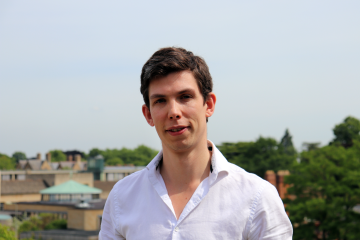
Oxford Mathematician James Maynard has been elected Fellow of the Royal Society (FRS) for his outstanding contributions to science.
The fully compressed subgroup membership problem
Linton, M
(19 Oct 2021)
http://arxiv.org/abs/2110.10055v2
One-relator hierarchies
Linton, M
(23 Feb 2022)
http://arxiv.org/abs/2202.11324v3
Hyperbolic one-relator groups
Linton, M
(08 Nov 2022)
http://arxiv.org/abs/2211.04371v1
On the coherence of one-relator groups and their group algebras
Jaikin-Zapirain, A
Linton, M
(10 Mar 2023)
http://arxiv.org/abs/2303.05976v3
Quantum leakage detection using a model-independent dimension witness
Strikis, A
Datta, A
Knee, G
(13 Nov 2018)
http://arxiv.org/abs/1811.05220v3