

Firm-level production networks: what do we (really) know?
Bacilieri, A
Borsos, A
Astudillo-Estevez, P
Hoefer, M
Lafond, F
Journal of Economic Dynamics and Control
volume 187
(25 Mar 2026)
doi:10.1016/j.jedc.2026.105313
Problems, progress and perspectives in mathematical and computational biology
Wang, Q
Othmer, H
Maini, P
Bulletin of Mathematical Biology
volume 88
issue 5
(06 Apr 2026)
doi:10.1007/s11538-026-01620-8
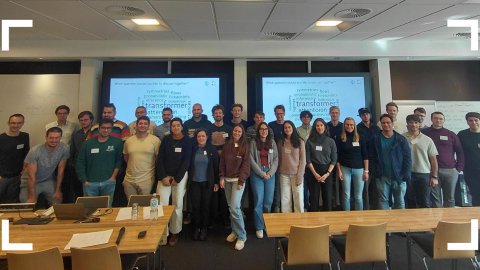
Workshop on the Mathematics of Transformers
Improved measurements of the TeV-PeV extragalactic neutrino spectrum from joint analyses of IceCube tracks and cascades
Abbasi, R
Ackermann, M
Adams, J
Agarwalla, S
Aguilar, J
Ahlers, M
Alameddine, J
Ali, S
Amin, N
Andeen, K
Arguelles, C
Ashida, Y
Athanasiadou, S
Axani, S
Babu, R
Bai, X
Baines-Holmes, J
V., A
Barwick, S
Bash, S
Basu, V
Bay, R
Beatty, J
Tjus, J
Behrens, P
Beise, J
Bellenghi, C
Benkel, B
BenZvi, S
Berley, D
Bernardini, E
Besson, D
Blaufuss, E
Bloom, L
Blot, S
Bodo, I
Bontempo, F
Motzkin, J
Meneguolo, C
Boser, S
Botner, O
Bottcher, J
Braun, J
Brinson, B
Brisson-Tsavoussis, Z
Burley, R
Butterfield, D
Campana, M
Carloni, K
Carpio, J
Chattopadhyay, S
Chau, N
Chen, Z
Chirkin, D
Choi, S
Clark, B
Coleman, A
Coleman, P
Collin, G
Borja, D
Connolly, A
Conrad, J
Corley, R
Cowen, D
De Clercq, C
DeLaunay, J
Delgado, D
Delmeulle, T
Deng, S
Desiati, P
de Vries, K
de Wasseige, G
DeYoung, T
Diaz-Velez, J
DiKerby, S
Dittmer, M
Domi, A
Draper, L
Dueser, L
Durnford, D
Dutta, K
DuVernois, M
Ehrhardt, T
Eidenschink, L
Eimer, A
Eller, P
Ellinger, E
Elsasser, D
Engel, R
Erpenbeck, H
Esmail, W
Eulig, S
Evans, J
Evenson, P
Fan, K
Fang, K
Farrag, K
Fazely, A
Fedynitch, A
Feigl, N
Finley, C
Fischer, L
Fox, D
Franckowiak, A
Fukami, S
Furst, P
Gallagher, J
Ganster, E
Garcia, A
Garcia, M
Garg, G
Genton, E
Gerhardt, L
Ghadimi, A
Glaser, C
Glusenkamp, T
Gonzalez, J
Goswami, S
Granados, A
Grant, D
Gray, S
Griffin, S
Griswold, S
Groth, K
Guevel, D
Gunther, C
Gutjahr, P
Ha, C
Haack, C
Hallgren, A
Halve, L
Halzen, F
Hamacher, L
Minh, M
Handt, M
Hanson, K
Hardin, J
Harnisch, A
Hatch, P
Haungs, A
Haussler, J
Helbing, K
Hellrung, J
Henke, B
Hennig, L
Henningsen, F
Heuermann, L
Hewett, R
Heyer, N
Hickford, S
Hidvegi, A
Hill, C
Hill, G
Hmaid, R
Hoffman, K
Hooper, D
Hori, S
Hoshina, K
Hostert, M
Hou, W
Huber, T
Hultqvist, K
Hymon, K
Ishihara, A
Iwakiri, W
Jacquart, M
Jain, S
Janik, O
Jansson, M
Jeong, M
Jin, M
Kamp, N
Kang, D
Kang, W
Kang, X
Kappes, A
Kardum, L
Karg, T
Karl, M
Karle, A
Katil, A
Kauer, M
Kelley, J
Khanal, M
Zathul, A
Kheirandish, A
Kimku, H
Kiryluk, J
Klein, C
Klein, S
Kobayashi, Y
Kochocki, A
Koirala, R
Kolanoski, H
Kontrimas, T
Kopke, L
Kopper, C
Koskinen, D
Koundal, P
Kowalski, M
Kozynets, T
Krieger, N
Krishnamoorthi, J
Krishnan, T
Kruiswijk, K
Krupczak, E
Kumar, A
Kun, E
Kurahashi, N
Lad, N
Gualda, C
Arnaud, L
Lamoureux, M
Larson, M
Lauber, F
Lazar, J
DeHolton, K
Leszczynska, A
Liao, J
Lin, C
Liu, Y
Liubarska, M
Love, C
Lu, L
Lucarelli, F
Luszczak, W
Lyu, Y
Madsen, J
Magnus, E
Makino, Y
Manao, E
Mancina, S
Mand, A
Maris, I
Marka, S
Marka, Z
Marten, L
Martinez-Soler, I
Maruyama, R
Mauro, J
Mayhew, F
McNally, F
Mead, J
Meagher, K
Mechbal, S
Medina, A
Meier, M
Merckx, Y
Merten, L
Mitchell, J
Molchany, L
Montaruli, T
Moore, R
Morii, Y
Mosbrugger, A
Moulai, M
Mousadi, D
Moyaux, E
Mukherjee, T
Naab, R
Nakos, M
Naumann, U
Necker, J
Neste, L
Neumann, M
Niederhausen, H
Nisa, M
Noda, K
Noell, A
Novikov, A
Pollmann, A
O’Dell, V
Olivas, A
Orsoe, R
Osborn, J
O’Sullivan, E
Palusova, V
Pandya, H
Parenti, A
Park, N
Parrish, V
Paudel, E
Paul, L
de los Heros, C
Pernice, T
Peterson, J
Plum, M
Ponten, A
Poojyam, V
Popovych, Y
Rodriguez, M
Pries, B
Procter-Murphy, R
Przybylski, G
Pyras, L
Raab, C
Rack-Helleis, J
Rad, N
Ravn, M
Rawlins, K
Rechav, Z
Rehman, A
Reistroffer, I
Resconi, E
Reusch, S
Rho, C
Rhode, W
Ricca, L
Riedel, B
Rifaie, A
Roberts, E
Robertson, S
Rongen, M
Rosted, A
Rott, C
Ruhe, T
Ruohan, L
Ryckbosch, D
Saffer, J
Salazar-Gallegos, D
Sampathkumar, P
Sandrock, A
Sanger-Johnson, G
Santander, M
Sarkar, S
Savelberg, J
Scarnera, M
Schaile, P
Schaufel, M
Schieler, H
Schindler, S
Schlickmann, L
Schluter, B
Schluter, F
Schmeisser, N
Schmidt, T
Schroder, F
Schumacher, L
Schwirn, S
Sclafani, S
Seckel, D
Seen, L
Seikh, M
Seunarine, S
Myhr, P
Shah, R
Shefali, S
Shimizu, N
Skrzypek, B
Snihur, R
Soedingrekso, J
Sogaard, A
Soldin, D
Soldin, P
Sommani, G
Spannfellner, C
Spiczak, G
Spiering, C
Stachurska, J
Stamatikos, M
Stanev, T
Stezelberger, T
Sturwald, T
Stuttard, T
Sullivan, G
Taboada, I
Ter-Antonyan, S
Terliuk, A
Thakuri, A
Thiesmeyer, M
Thompson, W
Thwaites, J
Tilav, S
Tollefson, K
Toscano, S
Tosi, D
Trettin, A
Upadhyay, A
Upshaw, K
Vaidyanathan, A
Valtonen-Mattila, N
Valverde, J
Vandenbroucke, J
Van Eeden, T
van Eijndhoven, N
Van Rootselaar, L
van Santen, J
Vara, J
Varsi, F
Venugopal, M
Vereecken, M
Carrasco, S
Verpoest, S
Veske, D
Vijai, A
Villarreal, J
Walck, C
Wang, A
Warrick, E
Weaver, C
Weigel, P
Weindl, A
Weldert, J
Wen, A
Wendt, C
Werthebach, J
Weyrauch, M
Whitehorn, N
Wiebusch, C
Williams, D
Witthaus, L
Wolf, M
Wrede, G
Xu, X
Yanez, J
Yao, Y
Yildizci, E
Yoshida, S
Young, R
Yu, F
Yu, S
Yuan, T
Zegarelli, A
Zhang, S
Zhang, Z
Zhelnin, P
Zilberman, P
Physical Review D
volume 113
issue 6
062002
(15 Mar 2026)
doi:10.1103/4n6v-r7n4
Evidence for a Spectral Break or Curvature in the Spectrum of Astrophysical Neutrinos from 5 TeV to 10 PeV
Abbasi, R
Ackermann, M
Adams, J
Agarwalla, S
Aguilar, J
Ahlers, M
Alameddine, J
Ali, S
Amin, N
Andeen, K
Arguelles, C
Ashida, Y
Athanasiadou, S
Axani, S
Babu, R
Bai, X
Baines-Holmes, J
V., A
Barwick, S
Bash, S
Basu, V
Bay, R
Beatty, J
Tjus, J
Behrens, P
Beise, J
Bellenghi, C
Benkel, B
BenZvi, S
Berley, D
Bernardini, E
Besson, D
Blaufuss, E
Bloom, L
Blot, S
Bodo, I
Bontempo, F
Motzkin, J
Meneguolo, C
Boser, S
Botner, O
Bottcher, J
Braun, J
Brinson, B
Brisson-Tsavoussis, Z
Burley, R
Butterfield, D
Campana, M
Carloni, K
Carpio, J
Chattopadhyay, S
Chau, N
Chen, Z
Chirkin, D
Choi, S
Clark, B
Coleman, A
Coleman, P
Collin, G
Borja, D
Connolly, A
Conrad, J
Corley, R
Cowen, D
De Clercq, C
DeLaunay, J
Delgado, D
Delmeulle, T
Deng, S
Desiati, P
de Vries, K
de Wasseige, G
DeYoung, T
Diaz-Velez, J
DiKerby, S
Dittmer, M
Domi, A
Draper, L
Dueser, L
Durnford, D
Dutta, K
DuVernois, M
Ehrhardt, T
Eidenschink, L
Eimer, A
Eller, P
Ellinger, E
Elsasser, D
Engel, R
Erpenbeck, H
Esmail, W
Eulig, S
Evans, J
Evenson, P
Fan, K
Fang, K
Farrag, K
Fazely, A
Fedynitch, A
Feigl, N
Finley, C
Fischer, L
Fox, D
Franckowiak, A
Fukami, S
Furst, P
Gallagher, J
Ganster, E
Garcia, A
Garcia, M
Garg, G
Genton, E
Gerhardt, L
Ghadimi, A
Glaser, C
Glusenkamp, T
Gonzalez, J
Goswami, S
Granados, A
Grant, D
Gray, S
Griffin, S
Griswold, S
Groth, K
Guevel, D
Gunther, C
Gutjahr, P
Ha, C
Haack, C
Hallgren, A
Halve, L
Halzen, F
Hamacher, L
Minh, M
Handt, M
Hanson, K
Hardin, J
Harnisch, A
Hatch, P
Haungs, A
Haussler, J
Helbing, K
Hellrung, J
Henke, B
Hennig, L
Henningsen, F
Heuermann, L
Hewett, R
Heyer, N
Hickford, S
Hidvegi, A
Hill, C
Hill, G
Hmaid, R
Hoffman, K
Hooper, D
Hori, S
Hoshina, K
Hostert, M
Hou, W
Huber, T
Hultqvist, K
Hymon, K
Ishihara, A
Iwakiri, W
Jacquart, M
Jain, S
Janik, O
Jansson, M
Jeong, M
Jin, M
Kamp, N
Kang, D
Kang, W
Kang, X
Kappes, A
Kardum, L
Karg, T
Karl, M
Karle, A
Katil, A
Kauer, M
Kelley, J
Khanal, M
Zathul, A
Kheirandish, A
Kimku, H
Kiryluk, J
Klein, C
Klein, S
Kobayashi, Y
Kochocki, A
Koirala, R
Kolanoski, H
Kontrimas, T
Kopke, L
Kopper, C
Koskinen, D
Koundal, P
Kowalski, M
Kozynets, T
Krieger, N
Krishnamoorthi, J
Krishnan, T
Kruiswijk, K
Krupczak, E
Kumar, A
Kun, E
Kurahashi, N
Lad, N
Gualda, C
Arnaud, L
Lamoureux, M
Larson, M
Lauber, F
Lazar, J
DeHolton, K
Leszczynska, A
Liao, J
Lin, C
Liu, Y
Liubarska, M
Love, C
Lu, L
Lucarelli, F
Luszczak, W
Lyu, Y
Madsen, J
Magnus, E
Makino, Y
Manao, E
Mancina, S
Mand, A
Maris, I
Marka, S
Marka, Z
Marten, L
Martinez-Soler, I
Maruyama, R
Mauro, J
Mayhew, F
McNally, F
Mead, J
Meagher, K
Mechbal, S
Medina, A
Meier, M
Merckx, Y
Merten, L
Mitchell, J
Molchany, L
Montaruli, T
Moore, R
Morii, Y
Mosbrugger, A
Moulai, M
Mousadi, D
Moyaux, E
Mukherjee, T
Naab, R
Nakos, M
Naumann, U
Necker, J
Neste, L
Neumann, M
Niederhausen, H
Nisa, M
Noda, K
Noell, A
Novikov, A
Pollmann, A
O’Dell, V
Olivas, A
Orsoe, R
Osborn, J
O’Sullivan, E
Palusova, V
Pandya, H
Parenti, A
Park, N
Parrish, V
Paudel, E
Paul, L
de los Heros, C
Pernice, T
Peterson, J
Plum, M
Ponten, A
Poojyam, V
Popovych, Y
Rodriguez, M
Pries, B
Procter-Murphy, R
Przybylski, G
Pyras, L
Raab, C
Rack-Helleis, J
Rad, N
Ravn, M
Rawlins, K
Rechav, Z
Rehman, A
Reistroffer, I
Resconi, E
Reusch, S
Rho, C
Rhode, W
Ricca, L
Riedel, B
Rifaie, A
Roberts, E
Robertson, S
Rongen, M
Rosted, A
Rott, C
Ruhe, T
Ruohan, L
Ryckbosch, D
Saffer, J
Salazar-Gallegos, D
Sampathkumar, P
Sandrock, A
Sanger-Johnson, G
Santander, M
Sarkar, S
Savelberg, J
Scarnera, M
Schaile, P
Schaufel, M
Schieler, H
Schindler, S
Schlickmann, L
Schluter, B
Schluter, F
Schmeisser, N
Schmidt, T
Schroder, F
Schumacher, L
Schwirn, S
Sclafani, S
Seckel, D
Seen, L
Seikh, M
Seunarine, S
Myhr, P
Shah, R
Shefali, S
Shimizu, N
Skrzypek, B
Snihur, R
Soedingrekso, J
Sogaard, A
Soldin, D
Soldin, P
Sommani, G
Spannfellner, C
Spiczak, G
Spiering, C
Stachurska, J
Stamatikos, M
Stanev, T
Stezelberger, T
Sturwald, T
Stuttard, T
Sullivan, G
Taboada, I
Ter-Antonyan, S
Terliuk, A
Thakuri, A
Thiesmeyer, M
Thompson, W
Thwaites, J
Tilav, S
Tollefson, K
Toscano, S
Tosi, D
Trettin, A
Upadhyay, A
Upshaw, K
Vaidyanathan, A
Valtonen-Mattila, N
Valverde, J
Vandenbroucke, J
Van Eeden, T
van Eijndhoven, N
Van Rootselaar, L
van Santen, J
Vara, J
Varsi, F
Venugopal, M
Vereecken, M
Carrasco, S
Verpoest, S
Veske, D
Vijai, A
Villarreal, J
Walck, C
Wang, A
Warrick, E
Weaver, C
Weigel, P
Weindl, A
Weldert, J
Wen, A
Wendt, C
Werthebach, J
Weyrauch, M
Whitehorn, N
Wiebusch, C
Williams, D
Witthaus, L
Wolf, M
Wrede, G
Xu, X
Yanez, J
Yao, Y
Yildizci, E
Yoshida, S
Young, R
Yu, F
Yu, S
Yuan, T
Zegarelli, A
Zhang, S
Zhang, Z
Zhelnin, P
Zilberman, P
Physical Review Letters
volume 136
issue 12
121002
(27 Mar 2026)
doi:10.1103/2gh9-d4q7
The IceCube-Gen2 project
Kowalski, M
Abbasi, R
Ackermann, M
Adams, J
Agarwalla, S
Aguilar, J
Ahlers, M
Alameddine, J
Ali, S
Amin, N
Andeen, K
Anton, G
Argüelles, C
Ashida, Y
Athanasiadou, S
Audehm, J
Axani, S
Babu, R
Bai, X
Balagopal V, A
Baricevic, M
Barwick, S
Basu, V
Bay, R
Becker Tjus, J
Behrens, P
Beise, J
Bellenghi, C
Benkel, B
BenZvi, S
Berley, D
Bernardini, E
Besson, D
Bishop, A
Blaufuss, E
Bloom, L
Blot, S
Bohmer, M
Bontempo, F
Book Motzkin, J
Borowka, J
Boscolo Meneguolo, C
BOSER, S
Botner, O
Bottcher, J
Bouma, S
Braun, J
Brinson, B
Brisson-Tsavoussis, Z
Burley, R
Bustamante, M
Butterfield, D
Campana, M
Carloni, K
Cataldo, M
Chattopadhyay, S
Chau, T
Chen, Z
Chirkin, D
Choi, S
Clark, B
Clark, R
Coleman, A
Coleman, P
Collin, G
Coloma Borja, D
Conrad, J
Corley, R
Cowen, D
Deaconu, C
DE CLERCQ, C
De Kockere, S
DeLaunay, J
Delgado, D
Delmeulle, T
Deng, S
Desai, A
Desiati, P
de Vries, K
de Wasseige, G
Diaz-Velez, J
DiKerby, S
Dittmer, M
Do, G
Domi, A
Draper, L
Dueser, L
Dujmovic, H
Durnford, D
Dutta, K
DuVernois, M
Egby, T
Ehrhardt, T
Eidenschink, L
Eimer, A
Eller, P
Ellinger, E
Elsässer, D
Engel, R
Erpenbeck, H
Esmail, W
Eulig, S
Evans, J
Evenson, P
Fan, K
Fang, K
Farrag, K
Fazely, A
Fedynitch, A
Feigl, N
Finley, C
Fischer, L
Flaggs, B
Fox, D
Franckowiak, A
Fujii, T
Fukami, S
Furst, P
Gallagher, J
Ganster, E
Garcia, A
Garg, G
Genton, E
Gerhardt, L
Ghadimi, A
Giri, P
Glaser, C
Glüsenkamp, T
Goswami, S
Granados, A
Grant, D
Gray, S
Griffin, S
Griswold, S
Guevel, D
Günther, C
Gutjahr, P
Ha, C
Haack, C
Hallgren, A
Hallmann, S
Halve, L
Halzen, F
Hamacher, L
Ha Minh, M
Handt, M
Hanson, K
Hardin, J
Harnisch, A
Hatch, P
Haungs, A
Haussler, J
Heinen, D
Helbing, K
Hellrung, J
Hendricks, B
Henke, B
Hennig, L
Henningsen, F
Henrichs, J
Heuermann, L
Heyer, N
Hickford, S
Hidvegi, A
Hill, C
Hill, G
Hoffman, K
Hoffmann, B
Hooper, D
Hori, S
Hoshina, K
Hostert, M
Hou, W
Huber, T
Huege, T
Huesca Santiago, E
Hultqvist, K
Hussain, R
Hymon, K
Ishihara, A
Ishii, T
Iwakiri, W
Jacquart, M
Jain, S
Jaitly, A
Janik, O
Jansson, M
Jeong, M
Jin, M
KALEKIN, O
Kamp, N
Kang, D
Kang, W
Kang, X
Kappes, A
Kardum, L
Karg, T
Karl, M
Karle, A
Katil, A
Katori, T
Katz, U
Kauer, M
Kelley, J
Khanal, M
Khatee Zathul, A
Kheirandish, A
Kiryluk, J
Kleifges, M
Klein, C
Klein, S
Kobayashi, T
Kobayashi, Y
Kochocki, A
Kolanoski, H
Kontrimas, T
Kopke, L
Kopper, C
Koskinen, J
Koundal, P
Kozynets, T
Kravchenko, I
Krieger, N
Jayakumar, K
Krishnan, T
Krupczak, E
Kumar, A
Kun, E
Kurahashi, N
Lad, N
Lallement Arnaud, L
Larson, M
Lauber, F
Leonard DeHolton, K
Leszczynska, A
Liao, J
Liu, M
Liubarska, M
Lohan, M
LoSecco, J
Love, C
Lu, L
Lucarelli, F
Lyu, Y
Madsen, J
Magnus, E
Mahn, K
Makino, Y
Manao, E
Mancina, S
Mandalia, S
Marie Sainte, W
Maris, I
Marka, S
Marka, Z
Marsee, M
Marten, L
Martinez-Soler, I
Maruyama, R
Mayhew, F
McNally, F
Mead, J
Meagher, K
Mechbal, S
Medina, A
Meier, M
Merckx, Y
Merten, L
Meyers, Z
Mikhailova, M
Millsop, A
Mitchell, J
Montaruli, T
Moore, R
Morii, Y
Morse, B
Mosbrugger, A
Moulai, M
Mousadi, D
Mukherjee, T
Muzio, M
Naab, R
Nakos, M
Narayan, A
Naumann, U
Necker, J
Nelles, A
Neste, L
Neumann, M
Niederhausen, H
Nisa, M
Noda, K
Noell, A
Novikov, A
Oberla, E
Pollmann, A
O'Dell, V
Olivas, A
Ørsøe, R
Osborn, J
O'Sullivan, E
Palusova, V
Papp, L
Parenti, A
Park, N
Paudel, E
Paul, L
Pérez de los Heros, C
Pernice, T
Petersen, T
Peterson, J
Pizzuto, A
Plum, M
Ponten, A
Popovych, Y
Prado Rodriguez, M
Pries, B
Procter-Murphy, R
Przybylski, G
Pyras, L
Rack-Helleis, J
Rad, N
Rameez, M
Ravn, M
Rawlins, K
Rechav, Z
Rehman, A
Resconi, E
Reusch, S
Rho, C
Rhode, W
Riedel, B
Riegel, M
Rifaie, A
Roberts, E
Robertson, S
Rongen, M
Rott, C
Ruhe, T
Ruohan, L
Ryckbosch, D
Safa, I
Saffer, J
Salazar-Gallegos, D
Sampathkumar, P
Sandrock, A
Sandstrom, P
Sanger-Johnson, G
Santander, M
Sarkar, S
Savelberg, J
Savina, P
Schaile, P
Schaufel, M
Schieler, H
Schindler, S
Schlickmann, L
Schlüter, B
Schlüter, F
Schmeisser, N
Schmidt, T
Schröder, F
Schumacher, L
Schwirn, S
Sclafani, S
Seckel, D
Seen, L
Seikh, M
Selcuk, Z
Seunarine, S
Shaevitz, M
Shah, R
Shefali, S
N, S
Silva, M
Skrzypek, B
Snihur, R
Soedingrekso, J
Sogaard, A
Soldin, D
Soldin, P
Sommani, G
Spannfellner, C
Spiczak, G
Spiering, C
Stachurska, J
Stamatikos, M
Stanev, T
Stezelberger, T
Stoffels, J
Sturwald, T
Stuttard, T
Sullivan, G
Taboada, I
Taketa, A
Tamang, T
Tanaka, H
Ter-Antonyan, S
Terliuk, A
Thiesmeyer, M
Thompson, W
Thwaites, J
Tilav, S
Tollefson, K
Torres, J
Toscano, S
Tosi, D
Trettin, A
Tsunesada, Y
Twagirayezu, J
Upadhyay, A
Upshaw, K
Vaidyanathan, A
Valtonen-Mattila, N
Valverde, J
Vandenbroucke, J
van Eeden, T
van Eijndhoven, N
van Rootselaar, L
van Santen, J
Vara Carbonell, F
Varsi, F
Veberic, D
Veitch-Michaelis, J
Venugopal, M
Vergara Carrasco, S
Verpoest, S
Vieregg, A
Vijai, A
Villarreal, J
Walck, C
Wang, A
Washington, D
Weaver, C
Weigel, P
Weindl, A
Weldert, J
Wen, A
Wendt, C
Werthebach, J
Weyrauch, M
Whitehorn, N
Wiebusch, C
Williams, D
Wissel, S
Witthaus, L
Wolf, M
Worner, G
Wrede, G
Wren, S
Xu, X
Yanez, J
Yao, Y
Yildizci, E
Yoshida, S
Young, R
Yu, F
Yu, S
Yuan, T
Zegarelli, A
Zhang, S
Zhang, Z
Zhelnin, P
Zierke, S
Zilberman, P
Zimmerman, M
1080
(24 Sep 2025)
doi:10.22323/1.501.1080
Optimal operation of floating flywheel energy storage under fluctuating electricity prices
Ward, R
Benham, G
Hewitt, I
(2025)
doi:10.2139/ssrn.5676535
Optimal operation of floating flywheel energy storage under fluctuating electricity prices
Ward, R
Benham, G
Hewitt, I
(2025)
doi:10.2139/ssrn.5655454
Many facets of cohomology: differential complexes and structure-aware formulation
Hu, K
Royal Society Open Science
volume 13
issue 3
250728-250728
(25 Mar 2026)
doi:10.1098/rsos.250728
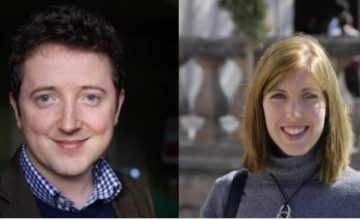
Oxford Mathematicians Patrick Farrell and Heather Harrington have been made Fellows of Society for Industrial and Applied Mathematics (SIAM).