Wed, 01 Jun 2016

16:00 - 17:00
C1

Finding CAT(-1) structures on groups

Sam Brown
(UCL London)
Abstract

I will describe a method to find negatively curved structures on some groups, by manipulating metrics on piecewise hyperbolic complexes. As an example, I will prove that hyperbolic limit groups are CAT(-1).

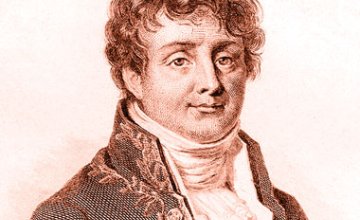
The Fourier transform is that rarest of things: a mathematical method from over 200 years ago which not only remains an active area of research in its own right, but is also an invaluable tool in nearly every branch of mathematics. Though originally developed by Fourier in 1807 to help solve certain partial differential equations, the transform is a living example of a remarkable feature of mathematics, that a tool created in one sub-discipline can break through these artificial classifications and become vital in another.

Horizontal curves of hyperbolic metrics
Rupflin, M Topping, P Calculus of Variations and Partial Differential Equations volume 57 issue 4 106 (15 Aug 2018) doi:10.1007/s00526-018-1386-y
Expectation particle belief propagation
Lienart, T Teh, Y Doucet, A Advances in Neural Information Processing Systems volume 2015-January 3609-3617 (01 Jan 2015)
Fri, 10 Feb 2017

16:00 - 17:00
L1

Self-organized dynamics: from emergence of consensus to social hydrodynamics

Eitan Tadmor
(University of Maryland and ETH-ITS)
Abstract

Self-organization is observed in systems driven by the “social engagement” of agents with their local neighbors. Prototypical models are found in opinion dynamics, flocking, self-organization of biological organisms, and rendezvous in mobile networks.

We discuss the emergent behavior of such systems. Two natural questions arise in this context. The underlying issue of the first question is how different rules of engagement influence the formation of clusters, and in particular, the emergence of 'consensus'. Different paradigms of emergence yield different patterns, depending on the propagation of connectivity of the underlying graphs of communication.  The second question involves different descriptions of self-organized dynamics when the number of agents tends to infinity. It lends itself to “social hydrodynamics”, driven by the corresponding tendency to move towards the local means. 

We discuss the global regularity of social hydrodynamics for sub-critical initial configurations.

Interacting Particle Markov chain Monte Carlo
Rainforth, T Naesseth, C Lindsten, F Paige, B van de Meent, J Doucet, A Wood, F (11 Jun 2016)
Controller Synthesis for Probabilistic Safety Specifications using Observers**This work is supported in part by the European Commission IAPP project AMBI 324432, and by the John Fell Oxford University Press(OUP) Research Fund.
Lesser, K Abate, A IFAC-PapersOnLine volume 48 issue 27 329-334 (2015) doi:10.1016/j.ifacol.2015.11.196
Subscribe to