

Jump Operator Planning: Goal-Conditioned Policy Ensembles and Zero-Shot Transfer.
Ringstrom, T
Hasanbeig, M
Abate, A
CoRR
volume abs/2007.02527
(2020)
Fri, 21 Aug 2020
15:00 -
16:00
Virtual
Noisy neurons and rainbow worms: theoretical and statistical perspectives on trees and their barcodes
Adélie Garin
(École Polytechnique Fédérale de Lausanne (EPFL))
Abstract
The TMD algorithm (Kanari et al. 2018) computes the barcode of a neuron (tree) with respect to the radial or path distance from the soma (root). We are interested in the inverse problem: how to understand the space of trees that are represented by the same barcode. Our tool to study this spaces is the stochastic TNS algorithm (Kanari et al. 2020) which generates trees from a given barcode in a biologically meaningful way.
I will present some theoretical results on the space of trees that have the same barcode, as well as the effect of adding noise to the barcode. In addition, I will provide a more combinatorial perspective on the space of barcodes, expressed in terms of the symmetric group. I will illustrate these results with experiments based on the TNS.
This is joint work with L. Kanari and K. Hess.
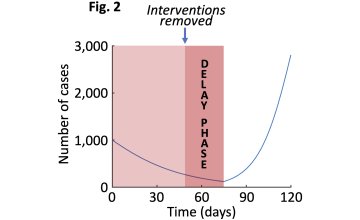
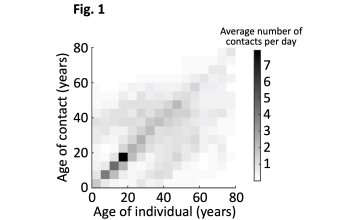
Mathematical models have been used throughout the COVID-19 pandemic to help plan public health measures. Attention is now turning to how interventions can be removed while continuing to restrict transmission. Predicting the effects of different possible COVID-19 exit strategies is an important current challenge requiring mathematical modelling, but many uncertainties remain.
Measuring Internal Forces in Single-Stranded DNA: Application to a DNA Force Clamp
Engel, M
Romano, F
Louis, A
Doye, J
JOURNAL OF CHEMICAL THEORY AND COMPUTATION
volume 16
issue 12
7764-7775
(2020)
doi:10.1021/acs.jctc.0c00286
Fri, 04 Dec 2020
14:00 -
15:00
Virtual
Family analysis with mendelian Imputations
Professor Austine Kong
(Nuffield Department of Population Health University of Oxford)
Abstract
Genotype-phenotype associations can be results of direct effects, genetic nurturing effects and population stratification confounding (The nature of nurture: Effects of parental genotypes, Science, 2018, Deconstructing the sources of genotype-phenotype associations in humans, Science, 2019). Genotypes from parents and siblings of the proband can be used to statistically disentangle these effects. To maximize power, a comprehensive framework for utilizing various combinations of parents’ and siblings’ genotypes is introduced. Central to the approach is mendelian imputation, a method that utilizes identity by descent (IBD) information to non-linearly impute genotypes into untyped relatives using genotypes of typed individuals. Applying the method to UK Biobank probands with at least one parent or sibling genotyped, for an educational attainment (EA) polygenic score that has a R2 of 5.7% with EA, its predictive power based on direct genetic effect alone is demonstrated to be only about 1.4%. For women, the EA polygenic score has a bigger estimated direct effect on age-at-first-birth than EA itself.
Fri, 27 Nov 2020
14:00 -
15:00
Virtual
Plant puzzle cell shape is an adaptation to a developmental constraint based on mechanical stress and isotropic growth
Dr Richard Smith
(John Innes Centre Norwich Research Park)
Abstract
The puzzle-shaped cells that appear in the epidermis of many plants are a striking example of a complex cell shape. Since shape in an organism is often thought to be closely related to its function, it suggests that these unusual shapes must have some functional benefit to the plant. We
propose that the creation of these complex shapes is an effective strategy to reduce mechanical stress in the cell wall. Although the
formation of these shapes requires highly anisotropic and non-uniform growth at the sub-cellular level, it appears to be triggered by
isotropic growth at the organ level. Analysis of cell shape over multiple species is consistent with the idea that the puzzle is in
response to a developmental constraint, and that the mechanism is like to be conserved among higher plants.