Mon, 05 Oct 2015
15:45
L6

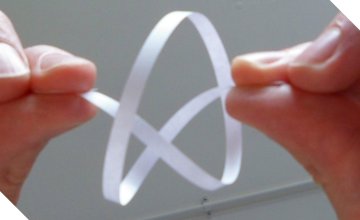
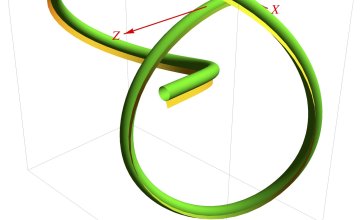
Quasicircles

Yves Benoist
(Université Paris XI, ORSAY)
Abstract

If you do not know quasicircles, you will understand what they are.
If you hate quasicircles, you will change your mind.
If you already love quasicircles, they will astonish you once more.

Mon, 16 Nov 2015
15:45
L6

Characterizing a vertex-transitive graph by a large ball

Romain Tessera
(Université Paris XI, ORSAY)
Abstract

It is well-known that a complete Riemannian manifold M which is locally isometric to a symmetric space is covered by a symmetric space. We will prove that a discrete version of this property (called local to global rigidity) holds for a large class of vertex-transitive graphs, including Cayley graphs of torsion-free lattices in simple Lie groups, and Cayley graph of torsion-free virtually nilpotent groups. By contrast, we will exhibit various examples of Cayley graphs of finitely presented groups (e.g. PGL(5, Z)) which fail to have this property, answering a question of Benjamini, Ellis, and Georgakopoulos. This is a joint work with Mikael de la Salle.

The distribution function of the Galaxy's dark halo
Binney, J Piffl, T Monthly Notices of the Royal Astronomical Society volume 454 issue 4 3653-3663 (21 Dec 2015)
Wed, 11 Nov 2015
15:00
L4

Quantum superposition attacks on symmetric encryption protocols

Ruediger Schack
(Royal Holloway, University of London)
Abstract

Quantum computers derive their computational power from the ability to manipulate superposition states of quantum registers. The generic quantum attack against a symmetric encryption scheme with key length n using Grover's algorithm has O(2^(n/2)) time complexity. For this kind of attack, an adversary only needs classical access to an encryption oracle. In this talk I discuss adversaries with quantum superposition access to encryption and decryption oracles. First I review and extend work by Kuwakado and Morii showing that a quantum computer with superposition access to an encryption oracle can break the Even-Mansour block cipher with key length n using only O(n) queries. Then, improving on recent work by Boneh and Zhandry, I discuss indistinguishability notions in chosen plaintext and chosen ciphertext attacks by a quantum adversary with superposition oracle access and give constructions that achieve these security notions.

Wed, 25 Nov 2015

17:00 - 18:00
L1

Symmetry, Spaces and Undecidability

Professor Martin Bridson
(Department of Mathematics)
Abstract
Oxford Mathematics Public Lectures - Chairman's Inaugural Public Lecture


Symmetry, Spaces and Undecidability 

Professor Martin Bridson


Martin Bridson became Head of the Mathematical Institute on 01 October 2015. To mark the occasion he will be giving an Inaugural Chairman's Public Lecture


When one wants to describe the symmetries of any object or system, in mathematics or everyday life, the right language to use is group theory. How might one go about understanding the universe of all groups and what kinds of novel geometry might emerge as we explore this universe?

 
The understanding of the possible geometries in dimension 3 is one of the triumphs of 20th century mathematics. Martin will explain why such an understanding is impossible in higher dimensions.
 

To register email @email


25 November 2015

5.00-6.00pm

Lecture Theatre 1

Mathematical Institute

Oxford


Martin Bridson is the Whitehead Professor of Pure Mathematics at the University of Oxford


Tue, 03 Nov 2015

14:00 - 14:30
L5

Collocation-based hybrid numerical-asymptotic methods for high frequency wave scattering

David Hewett
(University of Oxford)
Abstract

Wave scattering problems arise in numerous applications in acoustics, electromagnetics and linear elasticity. In the boundary element method (BEM) one reformulates the scattering problem as an integral equation on the scatterer boundary, e.g. using Green’s identities, and then seeks an approximate solution of the boundary integral equation (BIE) from some finite-dimensional approximation space. The conventional choice is a space of piecewise polynomials; however, in the “high frequency” regime when the wavelength is small compared to the size of the scatterer, it is computationally expensive to resolve the highly oscillatory wave solution in this way. The hybrid numerical-asymptotic (HNA) approach aims to reduce the computational cost by enriching the BEM approximation space with oscillatory functions, carefully chosen to capture the high frequency asymptotic solution behaviour. To date, the HNA methodology has been implemented almost exclusively in a Galerkin variational framework. This has many attractive features, not least the possibility of proving rigorous convergence results, but has the disadvantage of requiring numerical evaluation of high dimensional oscillatory integrals. In this talk I will present the results of some investigations carried out with my MSc student Emile Parolin into collocation-based implementations, which involve lower-dimensional integrals, but appear harder to analyse in terms of convergence and stability.

Tue, 27 Oct 2015

14:15 - 15:30
L4

Symplectic resolutions of quiver varieties.

Gwyn Bellamy
(University of Glasgow)
Abstract

Quiver varieties, as introduced by Nakaijma, play a key role in representation theory. They give a very large class of symplectic singularities and, in many cases, their symplectic resolutions too. However, there seems to be no general criterion in the literature for when a quiver variety admits a symplectic resolution. In this talk I will give necessary and sufficient conditions for a quiver variety to admit a symplectic resolution.  This result is based on work of Crawley-Bouvey and of Kaledin, Lehn and Sorger. The talk is based on joint work with T. Schedler.
 

Thu, 19 Nov 2015

12:00 - 13:00
L6

Why gradient flows of some energies good for defect equilibria are not good for dynamics, and an improvement

Amit Acharya
(Carnegie Mellon Univeristy)
Abstract
Straight screw dislocations are line defects in crystalline materials and wedge disclinations are line defects in nematic liquid crystals. In this talk, I will discuss the development and implications of a single pde model intended to describe equilibrium states and dynamics of these defects. These topological defects are classically treated as singularities that result in infinite total energy in bodies of finite extent that behave linearly in their elastic response. I will explain how such singularities can be alleviated by the introduction of an additional 'eigendeformation' field, beyond the fundamental fields of the classical theories involved. The eigendeformation field bears much similarity to gauge fields in high- energy physics, but arises from an entirely different standpoint not involving the notion of gauge invariance in our considerations. It will then be shown that an (L2) gradient flow of a 'canonical', phase- field type (up to details) energy function coupling the deformation to the eigendeformation field that succeeds in predicting the defect equilibrium states of interest necessarily has to fail in predicting particular types of physically important defect dynamics. Instead, a dynamical model based on the same
energy but involving a conservation statement for topological charge of the line defect field for its evolution will be shown to succeed. This is joint work with Chiqun Zhang, graduate student at CMU.
Subscribe to