

Thu, 24 Oct 2024

12:00 - 13:00
L3

Effective elasticity and dynamics of helical filaments under distributed loads

Michael Gomez
(Kings College London)
Abstract

Slender elastic filaments with intrinsic helical geometry are encountered in a wide range of physical and biological settings, ranging from coil springs in engineering to bacteria flagellar filaments. The equilibrium configurations of helical filaments under a variety of loading types have been well studied in the framework of the Kirchhoff rod equations. These equations are geometrically nonlinear and so can account for large, global displacements of the rod. This geometric nonlinearity also makes a mathematical analysis of the rod equations extremely difficult, so that much is still unknown about the dynamic behaviour of helical rods under external loading.

An important class of simplified models consists of 'equivalent-column' theories. These model the helical filament as a naturally-straight beam (aligned with the helix axis) for which the extensional and torsional deformations are coupled. Such theories have long been used in engineering to describe the free vibrations of helical coil springs, though their validity remains unclear, particularly when distributed forces and moments are present. In this talk, we show how such an effective theory can be derived systematically from the Kirchhoff rod equations using the method of multiple scales. Importantly, our analysis is asymptotically exact in the small-wavelength limit and can account for large, unsteady displacements. We then illustrate our theory with two loading scenarios: (i) a heavy helical rod deforming under its own weight; and (ii) axial rotation (twirling) in viscous fluid, which may be considered as a simple model for a bacteria flagellar filament. More broadly, our analysis provides a framework to develop reduced models of helical rods in a wide variety of physical and biological settings, as well as yielding analytical insight into their tensile instabilities.
Thu, 17 Oct 2024

12:00 - 13:00
L3

Microswimmer motility and natural robustness in pattern formation: the emergence and explanation of non-standard multiscale phenomena

Mohit Dalwadi
(Mathematical Institute)
Abstract
In this talk I use applied mathematics to understand emergent multiscale phenomena arising in two fundamental problems in fluids and biology.
 
In the first part, I discuss an overarching question in developmental biology: how is it that cells are able to decode spatio-temporally varying signals into functionally robust patterns in the presence of confounding effects caused by unpredictable or heterogeneous environments? This is linked to the general idea first explored by Alan Turing in the 1950s. I present a general theory of pattern formation in the presence of spatio-temporal input variations, and use multiscale mathematics to show how biological systems can generate non-standard dynamic robustness for 'free' over physiologically relevant timescales. This work also has applications in pattern formation more generally.
 
In the second part, I investigate how the rapid motion of 3D microswimmers affects their emergent trajectories in shear flow. This is an active version of the classic fluid mechanics result of Jeffery's orbits for inert spheroids, first explored by George Jeffery in the 1920s. I show that the rapid short-scale motion exhibited by many microswimmers can have a significant effect on longer-scale trajectories, despite the common neglect of this motion in some mathematical models, and how to systematically incorporate this effect into modified versions of Jeffery's original equations.
Improved estimates of COVID-19 correlates of protection, antibody decay and vaccine efficacy waning: a joint modelling approach
Phillips, D Christodoulou, M Feng, S Pollard, A Voysey, M Steinsaltz, D doi:10.1101/2024.07.02.24309776
Whole genome sequencing refines stratification and therapy of patients with clear cell renal cell carcinoma
Culliford, R Lawrence, S Mills, C Tippu, Z Chubb, D Cornish, A Browning, L Kinnersley, B Bentham, R Sud, A Pallikonda, H Frangou, A Gruber, A Litchfield, K Wedge, D Larkin, J Turajlic, S Houlston, R Nature Communications volume 15 issue 1 (15 Jul 2024) doi:10.1038/s41467-024-49692-1
Jointly estimating epidemiological dynamics of Covid-19 from case and wastewater data in Aotearoa New Zealand
Watson, L Plank, M Armstrong, B Chapman, J Hewitt, J Morris, H Orsi, A Bunce, M Donnelly, C Steyn, N communications medicine volume 4 issue 1 (15 Jul 2024) doi:10.1038/s43856-024-00570-3
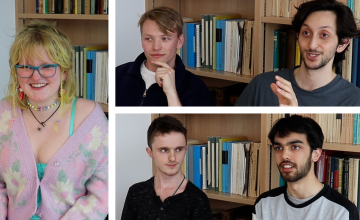
Photo of five students

Our final year students have now left us, in some cases never to return to mathematics, but in others to pursue the subject as researchers, in Oxford and across the globe.

However, before they left we asked some of them them to reflect on what they'd liked and disliked about the mathematics course, which parts of mathematics had really grabbed them, and whether they had any regrets - a fun and instructive exit interview, if you like.

Minimal activation with maximal reach: reachability clouds of bio-inspired slender manipulators
Kaczmarski, B Moulton, D Goriely, A Kuhl, E Extreme Mechanics Letters
Minimal activation with maximal reach: reachability clouds of bio-inspired slender manipulators
Kaczmarski, B Moulton, D Goriely, A Kuhl, E Extreme Mechanics Letters
Subscribe to