

Estimating the effects of non-pharmaceutical interventions on COVID-19 in Europe
Flaxman, S
Mishra, S
Gandy, A
Unwin, H
Mellan, T
Coupland, H
Whittaker, C
Zhu, H
Berah, T
Eaton, J
Monod, M
Ghani, A
Donnelly, C
Riley, S
Vollmer, M
Ferguson, N
Okell, L
Bhatt, S
Nature
volume 584
issue 7820
257-261
(13 Aug 2020)
Cautious Reinforcement Learning with Logical Constraints
Hasanbeig, M
Abate, A
Kroening, D
Autonomous agents and multiagent systems
483-491
(05 May 2020)

Ben Green and collaborators discover that the well-known "birthday paradox" has its equivalent in the divisors of a typical integer.
"The well-known "birthday paradox'' states that if you have 23 or more people in a room - something difficult to achieve nowadays without a very large room - then the chances are better than 50:50 that some pair of them will share a birthday. If we could have a party of 70 or more people, the chance of this happening rises to 99.9 percent.
Reconfigurable T‐junction DNA origami
Young, K
Najafi, B
Sant, W
Contera, S
Louis, A
Doye, J
Turberfield, A
Bath, J
Angewandte Chemie International Edition
volume 59
issue 37
15942-15946
(15 Jul 2020)
B cell zone reticular cell microenvironments shape CXCL13 gradient formation
Cosgrove, J
Novkovic, M
Albrecht, S
Pikor, N
Zhou, Z
Onder, L
Morbe, U
Cupovic, J
Miller, H
Alden, K
Thuery, A
O'Toole, P
Pinter, R
Jarrett, S
Taylor, E
Venetz, D
Heller, M
Uguccioni, M
Legler, D
Lacey, C
Coatesworth, A
Polak, W
Cupedo, T
Manoury, B
Thelen, M
Stein, J
Wolf, M
Leake, M
Timmis, J
Ludewig, B
Coles, M
Nature Communications
volume 11
(22 Jul 2020)
Unbiased Markov chain Monte Carlo for intractable target distributions
Middleton, L
Deligiannidis, G
Doucet, A
Jacob, P
Electronic Journal of Statistics
volume 14
issue 2
2842-2891
(07 Aug 2020)
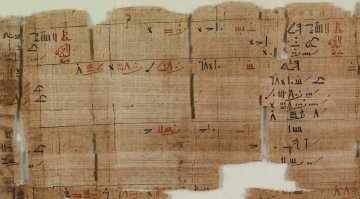
Oxford Mathematician Christopher Hollings and Oxford Egyptologist Richard Bruce Parkinson explain how our interpretation of Egyptian Mathematics has changed over the past two centuries and what that says about how historians of mathematics approach their subject.
The MAT livestream: a weekly online event talking about maths problems and discussing problem-solving strategies.
Graph-theoretic simplification of quantum circuits with the ZX-calculus
Duncan, R
Kissinger, A
Perdrix, S
van de Wetering, J
Quantum
volume 4
279-279
(04 Jun 2020)
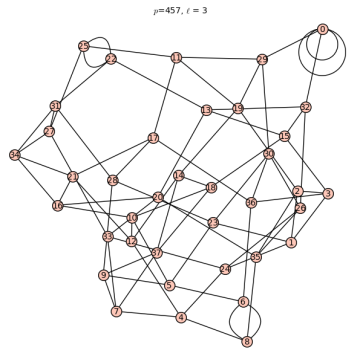
In modern Cryptography, the security of every cryptosystem is required to be formally proven. Most of the time, such formal proof is by contradiction: it shows that there cannot exist an adversary that breaks a specific cryptosystem, because otherwise the adversary would be able to solve a hard mathematical problem, i.e. a problem that needs an unfeasible amount of time (dozens of years) to be concretely solved, even with huge computational resources.