

Important reductions in the global number of MERS cases and deaths since 2016
Donnelly, C
Malik, M
Elkholy, A
Cauchemez, S
Van Kerkhove, M
Emerging Infectious Diseases
volume 25
issue 9
1758-1760
(07 Aug 2019)
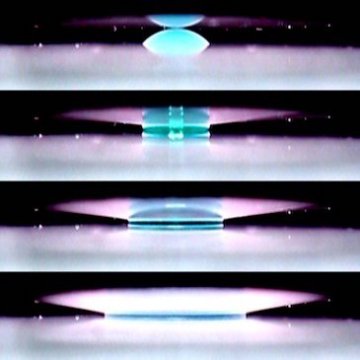
Have you ever picked up a glass to find that the coaster it was resting on remains stuck to the bottom? If so, then you have experienced the ability of fluid to stick two surfaces together. When the bottom of the glass is wetted, for example by accidentally spilling a drink, then this fluid can fill the gap between the glass and coaster. The surface tension of the liquid then provides a pulling force on the coaster that keeps it attached to the glass.
Fri, 21 Jun 2019
15:30 -
16:00
N3.12
Smoothness of Persistence
Jacob Leygonie
(Oxford University)
Abstract
We can see the simplest setting of persistence from a functional point of view: given a fixed finite simplicial complex, we have the barcode function which, given a filter function over this complex, returns the corresponding persistent diagram. The bottleneck distance induces a topology on the space of persistence diagrams, and makes the barcode function a continuous map: this is a consequence of the stability Theorem. In this presentation, I will present ongoing work that seeks to deepen our understanding of the analytic properties of the barcode function, in particular whether it can be said to be smooth. Namely, if we smoothly vary the filter function, do we get smooth changes in the resulting persistent diagram? I will introduce a notion of differentiability/smoothness for barcode valued maps, and then explain why the barcode function is smooth (but not everywhere) with respect to the choice of filter function. I will finally explain why these notions are of interest in practical optimisation/learning situations.
Fri, 21 Jun 2019
15:00 -
15:30
N3.12
Outlier Robust Subsampling Techniques for Persistent Homology
Bernadette Stolz-Pretzer
(Oxford University)
Abstract
The amount and complexity of biological data has increased rapidly in recent years with the availability of improved biological tools. When applying persistent homology to large data sets, many of the currently available algorithms however fail due to computational complexity preventing many interesting biological applications. De Silva and Carlsson (2004) introduced the so called Witness Complex that reduces computational complexity by building simplicial complexes on a small subset of landmark points selected from the original data set. The landmark points are chosen from the data either at random or using the so called maxmin algorithm. These approaches are not ideal as the random selection tends to favour dense areas of the point cloud while the maxmin algorithm often selects outliers as landmarks. Both of these problems need to be addressed in order to make the method more applicable to biological data. We study new ways of selecting landmarks from a large data set that are robust to outliers. We further examine the effects of the different subselection methods on the persistent homology of the data.
Relationship Between Activation of the Sympathetic Nervous System and Renal Blood Flow Autoregulation in Cirrhosis
Stadlbauer, V
Wright, G
Banaji, M
Mukhopadhya, A
Mookerjee, R
Moore, K
Jalan, R
Gastroenterology
volume 134
issue 1
111-119.e2
(Jan 2008)
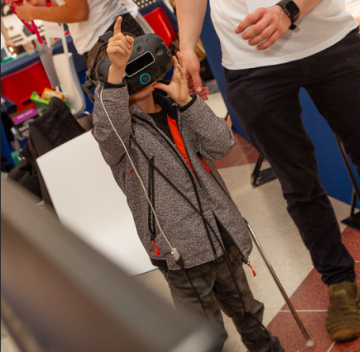
Getting tied up in knots, experimenting with bubbles, playing board games, doing origami, experiencing dimensions in virtual reality, exploring historical mathematical instruments and sorting out teddy bears. These were just some of the mathematical activities enjoyed by over 1000 visitors to the Oxford Maths Festival during the weekend of 11-12 May 2019.

From nanophotonics to aeroplanes, there are many applications that involve scattering in unbounded domains. Typically, one is interested in situations and geometries where there are no known analytical solutions and one has to resort to numerical algorithms to solve the problem using a computer. Such numerical algorithms should give physically meaningful solutions and hopefully obtain them with the minimal computational cost and time.
Fri, 29 Nov 2019
14:00 -
15:00
L3
Fluid mediated mechanical effects in biology of single cells: Hydrodynamics in strategies for early stage biofilm formation and DNA damage during migration in cancer cells
Dr Rachel Bennett
(School of Mathematics University of Bristol)
Abstract
In the first part of the talk, I will describe surface colonization strategies of the motile bacteria Pseudomonas aeruginosa. During early stages of biofilm formation, the majority of cells that land on a surface eventually detach. After a prolonged lag time, cells begin to cover the surface rapidly. Reversible attachments provide cells and their descendants with multigenerational memory of the surface that primes the planktonic population for colonization. Two different strains use different surface sensing machinery and show different colonization strategies. We use theoretical modelling to investigate how the hydrodynamics of type IV pili and flagella activity lead to increased detachment rates and show that the contribution from this hydrodynamic effect plays a role in the different colonization strategies observed in the two strains.
In the second part of the talk, I will show that when cells migrate through constricting pores, there is an increase in DNA damage and mutations. Experimental observations show that this breakage is not due to mechanical stress. I present an elastic-fluid model of the cell nucleus, coupled to kinetics of DNA breakage and repair proposing a mechanism by which nuclear deformation can lead to DNA damage. I show that segregation of soluble repair factors from the chromatin during migration leads to a decrease in the repair rate and an accumulation of damage that is sufficient to account for the extent of DNA damage observed experimentally.
Fri, 22 Nov 2019
14:00 -
15:00
L3
Uncovering the mechanisms of mutagenesis: from dry lab to wet lab and back again
Miss Marketa Tomkova
(Nuffield Dept of Medicine University of Oxford)
Abstract
Understanding the mechanisms of mutagenesis is important for prevention and treatment of numerous diseases, most prominently cancer. Large sequencing datasets revealed a substantial number of mutational processes in recent years, many of which are poorly understood or of completely unknown aetiology. These mutational processes leave characteristic sequence patterns in the DNA, often called "mutational signatures". We use bioinformatics methods to characterise the mutational signatures with respect to different genomic features and processes in order to unravel the aetiology and mechanisms of mutagenesis.
In this talk, I will present our results on how mutational processes might be modulated by DNA replication. We developed a linear-algebra-based method to quantify the magnitude of replication strand asymmetry of mutational signatures in individual patients, followed by detection of these signatures in early and late replicating regions. Our analysis shows that a surprisingly high proportion (more than 75 %) of mutational signatures exhibits a significant replication strand asymmetry or correlation with replication timing. However, distinct groups of signatures have distinct replication-associated properties, capturing differences in DNA repair related to replication, and how different types of DNA damage are translated into mutations during replication. These findings shed new light on the aetiology of several common but poorly explained mutational signatures, such as suggesting a novel role of replication in the mutagenesis due to 5-methylcytosine (signature 1), or supporting involvement of oxidative damage in the aetiology of a signature characteristic for oesophageal cancers (signature 17). I will conclude with our ongoing work of wet-lab validations of some of these hypotheses and usage of computational methods (such as genetic algorithms) in guiding the development of experimental protocols.