


Professor Michael Duff of Imperial College London and Visiting Professor here in the Mathematical Institute in Oxford has been awarded the Dirac Medal and Prize for 2017 by the Institute of Physics for “sustained groundbreaking contributions to theoretical physics including the discovery of Weyl anomalies, for having pioneered Kaluza-Klein supergravity, and for recognising that superstrings in 10 dimensions are merely a speci

Mon, 20 Nov 2017
17:00
17:00
St Catherine's
Optimization in the Darkness of Uncertainty when you don't know what you don't know, and what you do know isn't much!
Professor Kate Smith-Miles
(University of Melbourne)
Abstract
Many industrial optimisation problems involve the challenging task of efficiently searching for optimal decisions from a huge set of possible combinations. The optimal solution is the one that best optimises a set of objectives or goals, such as maximising productivity while minimising costs. If we have a nice mathematical equation for how each objective depends on the decisions we make, then we can usually employ standard mathematical approaches, such as calculus, to find the optimal solution. But what do we do when we have no idea how our decisions affect the objectives, and thus no equations? What if all we have is a small set of experiments, where we have tried to measure the effect of some decisions? How do we make use of this limited information to try to find the best decisions?
This talk will present a common industrial optimisation problem, known as expensive black box optimisation, through a case study from the manufacturing sector. For problems like this, calculus can’t help, and trial and error is not an option! We will introduce some methods and tools for tackling expensive black-box optimisation. Finally, we will discuss new methodologies for assessing the strengths and weaknesses of optimisation methods, to ensure the right method is selected for the right problem.
Differences in trappability of European badgers Meles meles in three populations in England
Tuyttens, F
Macdonald, D
Delahay, R
Rogers, L
Mallinson, P
Donnelly, C
Newman, C
Journal of Applied Ecology
volume 36
issue 6
1051-1062
(25 Dec 1999)
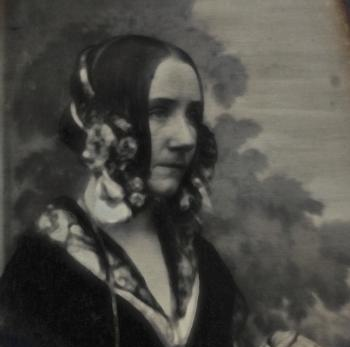
Ada Lovelace (1815–1852) is celebrated as “the first programmer” for her remarkable 1843 paper which explained Charles Babbage’s designs for a mechanical computer. New research reinforces the view that she was a gifted, perceptive and knowledgeable mathematician.
Fri, 01 Dec 2017
14:00 -
15:00
L3
Numerical approximations of a tractable mathematical model for tumour growth
Dr Vanessa Styles
(Dept of Mathematics University of Sussex)
Fri, 24 Nov 2017
14:00 -
15:00
L3
Some topics in infectious disease modelling: strains, claims, signals and more
Professor Julia Gog
(DAMTP University of Cambridge)
Abstract
This will be a whistle-stop tour of a few topics on infectious disease modelling, mainly influenza. Topics to include:
- challenges in capturing dynamics of pathogens with multiple co-circulating strains
- untangling the 2009 influenza pandemic from medical insurance claims data from the US
- bioinformatic methods to detect viral packaging signals
- and a big science project (top secret until the talk!)
Julia will be visiting the Mathematical Institute on sabbatical this term, and hopes this talk will help us find areas of overlapping interests.