

On PAC-Bayesian reconstruction guarantees for VAEs
Cherief-Abdellatif, B
Shi, Y
Doucet, A
Guedj, B
INTERNATIONAL CONFERENCE ON ARTIFICIAL INTELLIGENCE AND STATISTICS, VOL 151
volume 151
In vitro and in silico approaches to engineering three-dimensional biological tissues and organoids
Byrne, H
Interface Focus
volume 12
issue 5
(12 Aug 2022)
Corotational Hookean models of dilute polymeric fluids: existence of global weak solutions, weak-strong uniqueness, equilibration and macroscopic closure
Dębiec, T
Suli, E
SIAM Journal on Mathematical Analysis
volume 55
issue 1
310-346
(02 Feb 2023)
Constructing custom-made radiotranscriptomic signatures of vascular inflammation from routine CT angiograms: a prospective outcomes validation study in COVID-19
Kotanidis, C
Xie, C
Alexander, D
Rodrigues, J
Burnham, K
Mentzer, A
O’Connor, D
Knight, J
Siddique, M
Lockstone, H
Thomas, S
Kotronias, R
Oikonomou, E
Badi, I
Lyasheva, M
Shirodaria, C
Lumley, S
Constantinides, B
Sanderson, N
Rodger, G
Chau, K
Lodge, A
Tsakok, M
Gleeson, F
Adlam, D
Rao, P
Indrajeet, D
Deshpande, A
Bajaj, A
Hudson, B
Srivastava, V
Farid, S
Krasopoulos, G
Sayeed, R
Ho, L
Neubauer, S
Newby, D
Channon, K
Deanfield, J
Antoniades, C
Ahern, D
Ai, Z
Ainsworth, M
Allan, C
Allcock, A
Angus, B
Ansari, M
Arancibia-Cárcamo, C
Aschenbrenner, D
Attar, M
Lancet Digital Health
volume 4
issue 10
e705-e716
(26 Aug 2022)
Interferon-α-mediated therapeutic resistance in early rheumatoid arthritis implicates epigenetic reprogramming
Cooles, F
Tarn, J
Lendrem, D
Naamane, N
Lin, C
Millar, B
Maney, N
Anderson, A
Thalayasingam, N
Diboll, J
Bondet, V
Duffy, D
Barnes, M
Smith, G
Ng, S
Watson, D
Henkin, R
Cope, A
Reynard, L
Pratt, A
Isaacs, J
Hughes-Morley, A
Walker, A
Cuza, A
Gallagher-Syed, A
Buckley, C
Annals of the Rheumatic Diseases
volume 81
issue 9
1214-1223
(09 Jun 2022)
Effects of basal topography and ice-sheet surface slope in a subglacial glaciofluvial deposition model
Stevens, D
Ely, J
Livingstone, S
Clark, C
Butcher, F
Hewitt, I
Journal of Glaciology
volume 69
issue 274
397-409
(17 Aug 2022)
Cohesion and Repulsion in Bayesian Distance Clustering
Natarajan, A
De Iorio, M
Heinecke, A
Mayer, E
Glenn, S
(02 Apr 2024)
Search for Spatial Correlations of Neutrinos with Ultra-high-energy Cosmic Rays
collaboration, T
Albert, A
Alves, S
André, M
Anghinolfi, M
A., M
Ardid, S
Aubert, J
Aublin, J
Baret, B
Basa, S
Belhorma, B
Bendahman, M
Bertin, V
Biagi, S
Bissinger, M
Boumaaza, J
Bouta, M
Bouwhuis, M
Brânzaş, H
Bruijn, R
Brunner, J
Busto, J
Caiffi, B
Calvo, D
The Astrophysical Journal
volume 934
issue 2
164-164
(03 Aug 2022)
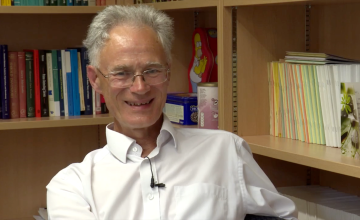
Oxford Mathematician Roger Heath-Brown has been awarded the Sylvester Medal by the Royal Society "for his many important contributions to the study of prime numbers and solutions to equations in integers". The Sylvester Medal is awarded annually by the Royal Society for an outstanding researcher in the field of mathematics. The award was created in memory of the mathematician James Joseph Sylvester who was Savilian Professor of Geometry at the University of Oxford in the 1880s.