

Higgs off-shell effects at NLO
Röntsch, R
Caola, F
Dowling, M
Melnikov, K
Tancredi, L
402
(06 Feb 2017)
doi:10.22323/1.282.0402
Green's temperature functions of massive scalar particles for finite matter density
Vshivtsev, A
Zhukovskii, V
Starinets, A
Russian Physics Journal
volume 34
issue 7
589-596
(Jul 1991)
doi:10.1007/bf00897986
Quasiaccurately solvable quantum mechanics problems and the anharmonic oscillator problem
Vshivtsev, A
Zhukovskii, V
Potapov, R
Starinets, A
Russian Physics Journal
volume 36
issue 2
161-172
(Feb 1993)
doi:10.1007/bf00574101
RG fixed points in supergravity duals of 4-d field theory and asymptotically AdS spaces
Porrati, M
Starinets, A
Physics Letters B
volume 454
issue 1-2
77-83
(May 1999)
doi:10.1016/s0370-2693(99)00394-9
Vacuum polarization due to a non-Abelian spherically symmetric chromodynamic field at a finite temperature
Vshivtsev, A
Zhukovskii, V
Starinets, A
Russian Physics Journal
volume 35
issue 11
1049-1055
(Nov 1992)
doi:10.1007/bf00559103
Tue, 18 May 2021
14:30
14:30
Virtual
Numerical analysis of a topology optimization problem for Stokes flow
John Papadopoulos
(Mathematical Insittute)
Abstract
A topology optimization problem for Stokes flow finds the optimal material distribution of a Stokes fluid that minimizes the fluid’s power dissipation under a volume constraint. In 2003, T. Borrvall and J. Petersson [1] formulated a nonconvex optimization problem for this objective. They proved the existence of minimizers in the infinite-dimensional setting and showed that a suitably chosen finite element method will converge in a weak(-*) sense to an unspecified solution. In this talk, we will extend and refine their numerical analysis. We will show that there exist finite element functions, satisfying the necessary first-order conditions of optimality, that converge strongly to each isolated local minimizer of the problem.
[1] T. Borrvall, J. Petersson, Topology optimization of fluids in Stokes flow, International Journal for Numerical Methods in Fluids 41 (1) (2003) 77–107. doi:10.1002/fld.426.
A link for this talk will be sent to our mailing list a day or two in advance. If you are not on the list and wish to be sent a link, please contact @email.
Ultra-fast super-resolution imaging of biomolecular mobility in tissues
Miller, H
Cosgrove, J
Wollman, A
Toole, P
Coles, M
Leake, M
179747
(23 Aug 2017)
doi:10.1101/179747
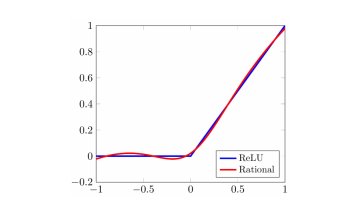
Deep learning has become an important topic across many domains of science due to its recent success in image recognition, speech recognition, and drug discovery. Deep learning techniques are based on neural networks, which contain a certain number of layers to perform several mathematical transformations on the input.
The Athena Swan Charter is a framework which is used across the globe to support and transform gender equality within higher education (HE) and research.