

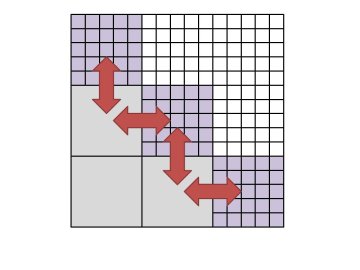
Numerous processes across both the physical and biological sciences are driven by diffusion, for example transport of proteins within living cells, and some drug delivery mechanisms. Diffusion is an unguided process which is of great importance at small spatial scales.
The health of enrolled and non enrolled children of school age in Tanga, Tanzania
Beasley, N
Hall, A
Tomkins, A
Donnelly, C
Ntimbwa, P
Kivuga, J
Kihamia, C
Lorri, W
Bundy, D
Acta Tropica
volume 76
issue 3
223-229
(Oct 2000)
Poloidal asymmetries in edge pedestals on Alcator C-Mod
Theiler, C
Churchill, R
Hutchinson, I
Lipschultz, B
Catto, P
Chang, C
Edlund, E
Ennever, P
Ernst, D
Hager, R
Hubbard, A
Hughes, J
Landreman, M
Marmar, E
Parra, F
Reinke, M
Terry, J
Walk, J
Whyte, D
42nd European Physical Society Conference on Plasma Physics Eps 2015
(01 Jan 2015)
Scalable Bayesian nonparametric regression via a Plackett-Luce model for conditional ranks.
Gray-Davies, T
Holmes, C
Caron, F
Electronic journal of statistics
volume 10
issue 2
1807-1828
(Jul 2016)
Estimating the Number of Communities in a Network.
Newman, M
Reinert, G
Physical review letters
volume 117
issue 7
078301
(11 Aug 2016)
Unraveling the drivers of MERS-CoV transmission.
Cauchemez, S
Nouvellet, P
Cori, A
Jombart, T
Garske, T
Clapham, H
Moore, S
Mills, H
Salje, H
Collins, C
Rodriquez-Barraquer, I
Riley, S
Truelove, S
Algarni, H
Alhakeem, R
AlHarbi, K
Turkistani, A
Aguas, R
Cummings, D
Van Kerkhove, M
Donnelly, C
Lessler, J
Fraser, C
Al-Barrak, A
Ferguson, N
Proceedings of the National Academy of Sciences of the United States of America
volume 113
issue 32
9081-9086
(01 Aug 2016)
Thu, 24 Nov 2016
16:00 -
17:30
L4
The Randomised Heston model
Jack Jacquier
(Imperial College London)
Abstract
We propose a randomised version of the Heston model--a widely used stochastic volatility model in mathematical finance--assuming that the starting point of the variance process is a random variable. In such a system, we study the small- and large-time behaviours of the implied volatility, and show that the proposed randomisation generates a short-maturity smile much steeper (`with explosion') than in the standard Heston model, thereby palliating the deficiency of classical stochastic volatility models in short time. We precisely quantify the speed of explosion of the smile for short maturities in terms of the right tail of the initial distribution, and in particular show that an explosion rate of $t^\gamma$ (gamma in [0,1/2]) for the squared implied volatility--as observed on market data--can be obtained by a suitable choice of randomisation. The proofs are based on large deviations techniques and the theory of regular variations. Joint work with Fangwei Shi (Imperial College London)
Thu, 01 Dec 2016
16:00 -
17:30
L4
A Bayesian Methodology for Systemic Risk Assessment in Financial Networks
Luitgard A. M. Veraart
(LSE)
Abstract
We develop a Bayesian methodology for systemic risk assessment in financial networks such as the interbank market. Nodes represent participants in the network and weighted directed edges represent liabilities. Often, for every participant, only the total liabilities and total assets within this network are observable. However, systemic risk assessment needs the individual liabilities. We propose a model for the individual liabilities, which, following a Bayesian approach, we then condition on the observed total liabilities and assets and, potentially, on certain observed individual liabilities. We construct a Gibbs sampler to generate samples from this conditional distribution. These samples can be used in stress testing, giving probabilities for the outcomes of interest. As one application we derive default probabilities of individual banks and discuss their sensitivity with respect to prior information included to model the network. An R-package implementing the methodology is provided. (This is joint work with Axel Gandy (Imperial College London).)
Thu, 17 Nov 2016
16:00 -
17:30
L4
The existence of densities of BSDEs
Daniel Schwarz
(UCL)
Abstract
We introduce sufficient conditions for the solution of a multi-dimensional, Markovian BSDE to have a density. We show that a system of BSDEs possesses a density if its corresponding semilinear PDE exhibits certain regularity properties, which we verify in the case of several examples.