

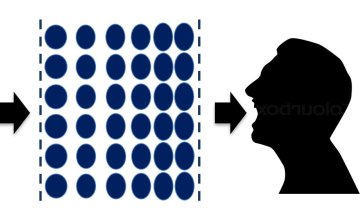
How do we design face masks that efficiently remove contaminants while ensuring that we can still breathe easily? One complicating factor with this question is the fact that the properties of the material that we start off with for our face mask can be very different when in use. A key example is seen when you stretch the mask around your face to put it on. In doing so, you also stretch the pores, i.e., the holes in the material that allow the air to pass through.
Thu, 18 Jun 2020
16:00 -
17:00
Deep Neural Networks for Optimal Execution
LAURA LEAL
(Princeton)
Abstract
Abstract: We use a deep neural network to generate controllers for optimal trading on high frequency data. For the first time, a neural network learns the mapping between the preferences of the trader, i.e. risk aversion parameters, and the optimal controls. An important challenge in learning this mapping is that in intraday trading, trader's actions influence price dynamics in closed loop via the market impact. The exploration--exploitation tradeoff generated by the efficient execution is addressed by tuning the trader's preferences to ensure long enough trajectories are produced during the learning phase. The issue of scarcity of financial data is solved by transfer learning: the neural network is first trained on trajectories generated thanks to a Monte-Carlo scheme, leading to a good initialization before training on historical trajectories. Moreover, to answer to genuine requests of financial regulators on the explainability of machine learning generated controls, we project the obtained ``blackbox controls'' on the space usually spanned by the closed-form solution of the stylized optimal trading problem, leading to a transparent structure. For more realistic loss functions that have no closed-form solution, we show that the average distance between the generated controls and their explainable version remains small. This opens the door to the acceptance of ML-generated controls by financial regulators.
Thu, 18 Jun 2020
16:45 -
17:30
Virtual
The algebraic structure of C*-algebras associated to groups
Matthew Kennedy
(University of Waterloo)
Abstract
Since the work of von Neumann, the theory of operator algebras has been closely linked to the theory of groups. On the one hand, operator algebras constructed from groups provide an important source of examples and insight. On the other hand, many problems about groups are most naturally studied within an operator-algebraic framework. In this talk I will give an overview of some problems relating the structure of a group to the structure of a corresponding C*-algebra. I will discuss recent results and some possible future directions.
Further Information
Part of UK virtual operator algebra seminar: https://sites.google.com/view/uk-operator-algebras-seminar/home
Thu, 18 Jun 2020
16:00 -
16:45
Virtual
Non-local games: operator algebraic approaches
Ivan Todorov
(Queen's University Belfast)
Abstract
The study of non-local games has involved fruitful interactions between operator algebra theory and quantum physics, with a starting point the link between the Connes Embedding Problem and the Tsirelson Problem, uncovered by Junge et al (2011) and Ozawa (2013). Particular instances of non-local games, such as binary constraint system games and synchronous games, have played an important role in the pursuit of the resolution of these problems. In this talk, I will summarise part of the operator algebraic toolkit that has proved useful in the study of non-local games and of their perfect strategies, highlighting the role C*-algebras and operator systems play in their mathematical understanding.
Further Information
Part of UK virtual operator algebra seminar: https://sites.google.com/view/uk-operator-algebras-seminar/home
Mon, 08 Jun 2020
15:45
15:45
Virtual
The rates of growth in a hyperbolic group
Zlil Sela
(Hebrew University of Jerusalem)
Abstract
We study the countable set of rates of growth of a hyperbolic
group with respect to all its finite generating sets. We prove that the
set is well-ordered, and that every real number can be the rate of growth
of at most finitely many generating sets up to automorphism of the group.
We prove that the ordinal of the set of rates of growth is at least $ω^ω$,
and in case the group is a limit group (e.g., free and surface groups), it
is $ω^ω$.
We further study the rates of growth of all the finitely generated
subgroups of a hyperbolic group with respect to all their finite
generating sets. This set is proved to be well-ordered as well, and every
real number can be the rate of growth of at most finitely many isomorphism
classes of finite generating sets of subgroups of a given hyperbolic
group. Finally, we strengthen our results to include rates of growth of
all the finite generating sets of all the subsemigroups of a hyperbolic
group.
Joint work with Koji Fujiwara.
Mon, 22 Jun 2020
15:45
15:45
Virtual
Weil-Petersson geodesics and geometry of 3-manifolds
Yair Minsky
(Yale University)
Abstract
There is a well-known correspondence between Weil-Petersson geodesic loops in the moduli space of a surface S and hyperbolic 3-manifolds fibering over the circle with fibre S. Much is unknown, however, about the detailed relationship between geometric features of the loops and those of the 3-manifolds.
In work with Leininger-Souto-Taylor we study the relation between WP length and 3-manifold volume, when the length (suitably normalized) is bounded and the fiber topology is unbounded. We obtain a WP analogue of a theorem proved by Farb-Leininger-Margalit for the Teichmuller metric. In work with Modami, we fix the fiber topology and study connections between the thick-thin decomposition of a geodesic loop and that of the corresponding 3-manifold. While these decompositions are often in direct correspondence, we exhibit examples where the correspondence breaks down. This leaves the full conjectural picture somewhat mysterious, and raises many questions.
Thu, 04 Jun 2020
16:00 -
17:00
Multi-agent reinforcement learning: a mean-field perspective
Renyuan Xu
(University of Oxford)
Abstract
Multi-agent reinforcement learning (MARL) has enjoyed substantial successes in many applications including the game of Go, online Ad bidding systems, realtime resource allocation, and autonomous driving. Despite the empirical success of MARL, general theories behind MARL algorithms are less developed due to the intractability of interactions, complex information structure, and the curse of dimensionality. Instead of directly analyzing the multi-agent games, mean-field theory provides a powerful approach to approximate the games under various notions of equilibria. Moreover, the analytical feasible framework of mean-field theory leads to learning algorithms with theoretical guarantees. In this talk, we will demonstrate how mean-field theory can contribute to the simultaneous-learning-and-decision-making problems with unknown rewards and dynamics.
To approximate Nash equilibrium, we first formulate a generalized mean-field game (MFG) and establish the existence and uniqueness of the MFG solution. Next we show the lack of stability in naive combination of the Q-learning algorithm and the three-step fixed-point approach in classical MFGs. We then propose both value-based and policy-based algorithms with smoothing and stabilizing techniques, and establish their convergence and complexity results. The numerical performance shows superior computational efficiency. This is based on joint work with Xin Guo (UC Berkeley), Anran Hu (UC Berkeley), and Junzi Zhang (Stanford).
If time allows, we will also discuss learning algorithms for multi-agent collaborative games using mean-field control. The key idea is to establish the time consistent property, i.e., the dynamic programming principle (DPP) on the lifted probability measure space. We then propose a kernel-based Q-learning algorithm. The convergence and complexity results are carried out accordingly. This is based on joint work with Haotian Gu, Xin Guo, and Xiaoli Wei (UC Berkeley).
Characterising DNA T-motifs by Simulation and Experiment
Najafi, B
Young, K
Bath, J
Louis, A
Doye, J
Turberfield, A
(23 May 2020)
Mon, 08 Jun 2020
16:00 -
17:00
Virtual
Kinetic transport in the Lorentz gas: classical and quantum
Jens Marklof
(Bristol University)
Abstract
In the first part of this lecture, I will discuss the proof of convergence of the Lorentz process, in the Boltzmann-Grad limit, to a random process governed by a generalised linear Boltzmann equation. This will hold for general scatterer configurations, including certain types of quasicrystals, and include the previously known cases of periodic and Poisson random scatterer configurations. The second part of the lecture will focus on quantum transport in the periodic Lorentz gas in a combined short-wavelength/Boltzmann-Grad limit, and I will report on some partial progress in this challenging problem. Based on joint work with Andreas Strombergsson (part I) and Jory Griffin (part II).
Mon, 01 Jun 2020
15:15 -
16:30
Virtual
The non-linear stability of the Schwarzschild family of black holes
Gustav Holzegel
(Imperial College)
Abstract
TBA
Further Information
Please note that this seminar starts from 3:20.