

Flows about superhydrophobic surfaces
Abstract
Superhydrophobic surfaces, formed by air entrapment within the cavities of a hydrophobic solid substrate, offer a promising potential for drag reduction in small-scale flows. It turns out that low-drag configurations are associated with singular limits, which to date have typically been addressed using numerical schemes. I will discuss the application of singular perturbations to several of the canonical problems in the field.
Tomosynthesis with nonlinear compressed sensing
Abstract
A new generation of low cost 3D tomography systems is based on multiple emitters and sensors that partially convolve measurements. A successful approach to deconvolve the measurements is to use nonlinear compressed sensing models. We discuss such models, as well as algorithms for their solution.
Passive control of viscous flow via elastic snap-through
Abstract
Snap-through buckling is a type of instability in which an elastic object rapidly jumps from one state to another, just as an umbrella flips upwards in a gust of wind. While snap-through under dry, mechanical loads has already been harnessed in engineering to generate fast motions between two states, the mechanisms underlying snapping in bulk fluid flows remain relatively unexplored. In this talk we demonstrate how elastic snap-through may be used to passively control fluid flows at low Reynolds number, in contrast to some pre-existing valves that rely on active control. We study viscous flow through a channel in which one of the bounding walls is an elastic arch. By performing experiments at the macroscopic scale, we show that snap-through of the arch rapidly changes the channel from a constricted to an unconstricted state, increasing the hydraulic conductivity by up to an order of magnitude. We also observe nonlinear pressure-flux characteristics away from snapping due to the coupling between the driving flow and elasticity. This behaviour is confirmed by a mathematical model that also shows the device may readily be scaled down for microfluidic applications. Finally, we demonstrate that such a device may be used to create a fluidic analogue of a fuse: the fluid flux through a channel may not rise above a given value.
Andrew Wiles will be giving our first Oxford Mathematics London Public Lecture on Tuesday 28 November at 6.30pm in the Science Museum in London. Andrew will be talking about his current work and after the lecture he will be in conversation with mathematician and broadcaster Hannah Fry.
The event is now full but you can watch it live. It will also be streamed on the Oxford University Facebook page.
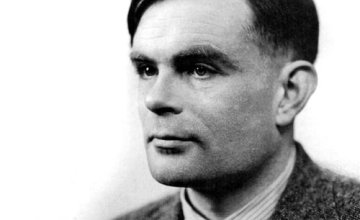
The Alan Turing Institute is the national institute for data science, headquartered at the British Library. Five founding universities – Cambridge, Edinburgh, Oxford, UCL and Warwick – and the UK Engineering and Physical Sciences Research Council created The Institute in 2015. Now we are delighted to announce that four universities - Leeds, Manchester, Newcastle and Queen Mary University of London - are also set to join the Institute as university partners.