

Mathematical modelling of cortical neurogenesis reveals that the founder population does not necessarily scale with neuronal output
Picco, N
Garcia-Moreno, F
Woolley, T
Maini, P
Molnar, Z
Cerebral Cortex
(19 Oct 2017)
doi:10.1101/206045
Tue, 28 May 2019
12:00 -
13:15
L4
The Swampland, Holography and the Large Volume Scenario
Joseph Conlon
(Oxford)
Abstract
String compactifications are essential for connecting string theory to low energy particle physics and cosmology. Moduli stabilisation gives rise to effective Lagrangians that capture the low-energy degrees of freedom. Much recent interest has been on swampland consistency conditions on such effective
field theories - which low energy Lagrangians can arise from quantum gravity? Furthermore, given that moduli stabilisation scenarios often exist in AdS space, we can also ask: what do swampland conditions mean in the context of AdS/CFT? I describe work on developing a holographic understanding of moduli stabilisation and swampland consistency conditions. I focus in particular on the Large Volume Scenario, which is especially appealing from a holographic perspective as in the large volume limit all its interactions can be expressed solely in terms of the AdS radius, with no free dimensionless parameters.
Tue, 14 May 2019
12:00 -
13:15
L4
Local operators in integrable quantum field theories
Henning Bostelmann
(York)
Abstract
Integrable models provide simplified examples of quantum field theories with self-interaction. As often in relativistic quantum theory, their local observables are difficult to control mathematically. One either tries to construct pointlike local quantum fields, leading to possibly divergent series expansions, or one defines the local observables indirectly via wedge-local quantities, losing control over their explicit form.
We propose a new, hybrid approach: We aim to describe local quantum fields; but rather than exhibiting their n-point functions and verifying the Wightman axioms, we establish them as closed operators affiliated with a net of von Neumann algebras. This is shown to work at least in the Ising model.
Tue, 11 Jun 2019
12:00 -
13:15
L4
Vacuum polarization on topological black holes
Elizabeth Winstanley
(Sheffield)
Abstract
The renormalized expectation value of the stress energy tensor (RSET) is an object of central importance in quantum field theory in curved space-time, but calculating this on black hole space-times is far from trivial. The vacuum polarization (VP) of a quantum scalar field is computationally simpler and shares some features with the RSET. In this talk we consider the properties of the VP for a massless, conformally coupled scalar field on asymptotically anti-de Sitter black holes with spherical, flat and hyperbolic horizons. We focus on the effect of the different horizon curvature on the VP, and the role played by the boundary conditions far from the black hole.
Tue, 30 Apr 2019
14:00 -
15:15
L4
Single electron entanglement and the Aharonov-Bohm Effect
Vlatko Vedral
(Oxford)
Abstract
I will review the idea that entanglement must ultimately be understood in terms of modes, rather than in terms of particles. The most striking instance of mode entanglement is a single particle entangled state, which I will discuss both in the case of bosons as well as in the case of fermions. I then proceed to show that the Aharonov-Bohm effect can be understood by using a single electron entangled state. Finally, I will argue that this demonstrates beyond doubt that the Aharonov-Bohm effect is non non-local, contrary to what is frequently claimed in the literature.
Further Information
Please note the change of time (just this week)

Oxford Mathematics Visiting Fellow and Reader in Applied Mathematics at the University of Bath, Apala Majumdar has been awarded the 2019 FDM Everywoman in Tech Academic Award. This is awarded to a woman in academia who has made an outstanding contribution to technology and science and whose work has made or has the potential to make a significant long-term impact in STEM.
Tue, 18 Jun 2019
15:30 -
16:30
L3
Noncommutative geometry from generalized Kahler structures
Marco Gualtieri
(University of Toronto)
Abstract
After reviewing our recent description of generalized Kahler structures in terms of holomorphic symplectic Morita equivalence, I will describe how this can be used for explicit constructions of toric generalized Kahler metrics. Then I will describe how these ideas, combined with concepts from geometric quantization, provide a new approach to noncommutative algebraic geometry.
On the figure of elastic planets I: gravitational collapse and infinitely many equilibria
Jai, F
Kodio, O
Chapman, S
Goriely, A
Proceedings of the Royal Society A: Mathematical, Physical and Engineering Sciences
volume 475
2224
(17 Apr 2019)
doi:10.1098/rspa.2018.0815
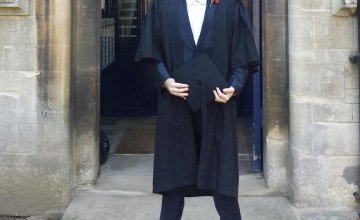

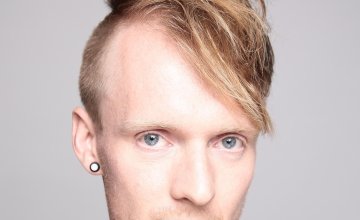
Three Oxford Mathematicians, Kristian Kiradjiev, Liam Brown and Tom Crawford are to present their research in Parliament at this year’s STEM for Britain competition at the House of Commons on 13th March. This prestigious competition provides an opportunity for researchers to communicate their research to parliamentarians.
A Bayesian model for sparse graphs with flexible degree distribution and overlapping community structure
Lee, J
James, L
Choi, S
Caron, F
Proceedings of Machine Learning Research
volume 89
758-767
(11 Apr 2019)