

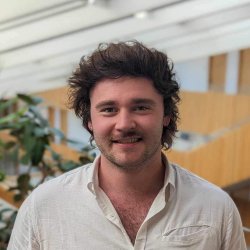
Joshua Moore

University of Oxford
Andrew Wiles Building
Radcliffe Observatory Quarter
Woodstock Road
Oxford
OX2 6GG
MuSpAn: A Toolbox for Multiscale Spatial Analysis. JA Bull*, JW Moore*, ..., HM Byrne. Nature Communications. (2026) https://doi.org/10.1038/s41467-026-75649-7
Therapeutic manipulation and spatial quantification of the tumor microenvironment in colorectal cancer. EJ Mulholland-Illingworth*, JW Moore*, ..., SJ Leedham. iScience (2026) https://doi.org/10.1016/j.isci.2026.115193
Modelling polarity-driven laminar patterns in bilayer tissues with mixed signalling mechanisms. JW Moore, TC Dale, TE Woolley. SIAM Journal of Applied Dynamical Systems. (2023) https://doi.org/10.1137/22M1522565
Polarity-driven laminar pattern formation by lateral-inhibition in 2D and 3D bilayer geometries. JW Moore, TC Dale, TE Woolley. IMA Journal of Applied Mathematics (2022) https://doi.org/10.1093/imamat/hxac011
A General Computational Framework for COVID-19 Modelling with Applications to Testing Varied Interventions in Education Environments. JW Moore, Z Lau, K Kaouri, TC Dale, TE Woolley. COVID (2021) https://doi.org/10.3390/covid1040055
Further development of spinal cord retreatment dose estimation: including radiotherapy with protons and light ions. JW Moore, TE Woolley, JW Hopewell, B Jones. International Journal of Radiation Biology (2021) https://doi.org/10.1080/09553002.2021.1981554
OR Society Griffiths Medal (2023).
IMA Lighthill-Thwaites finalist (2021).
First place in NERC COVID-19 Hackathon: Recovery (2020).
Knowledge Economy Skills Scholarship for Doctoral Studies (2019).
CUROP undergraduate research scholarship (2019).
I am primarily interested in unravelling the information contained in the spatial properties of cellular biology to explore questions in cancer detection, optimal treatment planning and cellular self-organisation. My current research focuses on developing novel techniques for detecting spatial structures within high-dimensional multiplex images and deriving mechanistic models of these emergent patterns.
To support translation of this research in useful practice, I am passionate about translating methodological advances into practical tools for the wider research and clinical communities. I develop open-source software and interactive applications that make cutting-edge spatial analysis and mathematical modelling accessible.