

University of Oxford Home

Search form

  • Log in
  • Members
  • Study Here
    • Undergraduate Study
    • Postgraduate Study
    • Current Students
  • Research
    • Research Groups
    • Case Studies
    • Faculty Books
  • Outreach
    • Posters
    • Oxford Mathematics Alphabet
    • Oxford Online Maths Club
    • Oxford Maths Festival
    • It All Adds Up
    • Problem Solving Matters
    • MIORPA
    • PROMYS Europe
    • Oxfordshire Maths Masterclasses
    • Outreach Information
    • Oxford Unbounded
    • Mailing List
  • Events
    • Venue Hire
    • Public Lectures & Events
    • Departmental Seminars & Events
    • Special Lectures
    • Conferences
    • Summer Schools
    • Past Events
    • Info for Event Organisers & Attendees
  • People
    • Key Contacts
    • People List
    • A Global Department
    • Research Fellowship Programmes
    • Professional Services Teams
  • About Us
    • Contact Us
    • Travel & Maps
    • Supporting Mathematics
    • Industry Engagement
    • News
    • Alumni
    • History
    • Our Building
    • Art and Oxford Mathematics
    • Equality, Diversity and Inclusion
    • Vacancies

Primary tabs

  • View
  • Contact
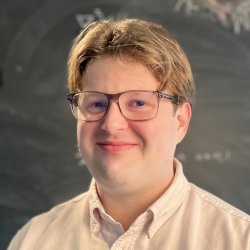
Tomás smiling

Tomás Gillanders

MSc, BSc
Pronouns
He / Him
Status
Postgraduate Student
Contact form
Research groups
  • Oxford Centre for Industrial and Applied Mathematics
Address
Mathematical Institute
University of Oxford
Andrew Wiles Building
Radcliffe Observatory Quarter
Woodstock Road
Oxford
OX2 6GG
Teaching

Michaelmas 2025    B5.2 Applied Partial Differential Equations, Teaching Assistant (Two intercollegiate classes)


Research interests

Nonlinear Elasticity, Solid Mechanics, Continuum Mechanics, Active Materials, Dynamical Systems


Active materials are characterised by a dynamic microstructure that can locally drive motion, grow and remodel itself, leading to large-scale observed effects that differ greatly from those of everyday 'passive' materials, and may even seem unintuitive or impossible until the small-scale mechanisms that drive them are understood.  We see a car move itself, but we do not notice the engine that drives it.  

Many models of active materials are phenomenological in nature, designed to mimic the behaviour observed without properly accounting for the fundamental principles of physics that govern every material.  I am interested in formulating concrete continuum theories of active solids that account for the dynamic microstructure that drives 'activity' while respecting those principles, for what active solid are such theories applicable, and what behaviours do such models predict. 

Prizes, awards, and scholarships

St John's College - EPSRC Partnership Award, 2025-29
Joint funded scholarship supporting full-time DPhil study in Mathematics.

Facebook LinkedIn Bluesky X
TikTok Instagram YouTube
London Mathematical Society Good Practice Scheme Athena SWAN Silver Award (ECU Gender Charter) Stonewall Silver Employer 2022

© Mathematical Institute

Accessibility Statement


Privacy Policy

Cookies

sfy39587stp18