

The IceCube Neutrino Observatory: instrumentation and online systems
Aartsen, M
Ackermann, M
Adams, J
Sarkar, S
Et al., E
Journal of Instrumentation
volume 12
issue 3
(14 Mar 2017)
Mon, 16 Jan 2017
15:45 -
16:45
L6
Coarse embeddings, and how to avoid them
David Hume
(Oxford)
Abstract
Coarse embeddings occur completely naturally in geometric group theory: every finitely generated subgroup of a finitely generated group is coarsely embedded. Since even very nice classes of groups - hyperbolic groups or right-angled Artin groups for example - are known to have 'wild' collections of subgroups, there are precious few invariants that one may use to prove a statement of the form '$H$ does not coarsely embed into $G$' for two finitely generated groups $G,H$.
The growth function and the asymptotic dimension are two coarse invariants which which have been extensively studied, and a more recent invariant is the separation profile of Benjamini-Schramm-Timar.
In this talk I will describe a new spectrum of coarse invariants, which include both the separation profile and the growth function, and can be used to tackle many interesting problems, for instance: Does there exist a coarse embedding of the Baumslag-Solitar group $BS(1,2)$ or the lamplighter group $\mathbb{Z}_2\wr\mathbb{Z}$ into a hyperbolic group?
This is part of an ongoing collaboration with John Mackay and Romain Tessera.
Mon, 23 Jan 2017
16:00 -
17:00
L4
Linearisation of multi-well energies
Mariapia Palombaro
(University of Sussex)
Abstract
Linear elasticity can be rigorously derived from finite elasticity in the case of small loadings in terms of \Gamma-convergence. This was first done by Dal Maso-Negri-Percivale in the case of one-well energies with super-quadratic growth. This has been later generalised to different settings, in particular to the case of multi-well energies where the distance between the wells is very small (comparable to the size of the load). I will discuss recent developments in the case when the distance between the wells is arbitrary. In this context linear elasticity can be derived by adding to the multi-well energy a singular higher order term which penalises jumps from one well to another. The size of the singular term has to satisfy certain scaling assumptions which turn out to be optimal. (This is joint work with Alicandro, Dal Maso and Lazzaroni.)
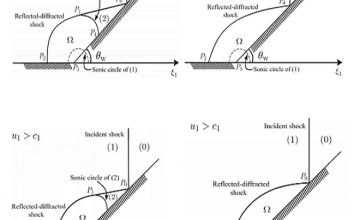
As part of our series of research articles deliberately focusing on the rigour and complexity of mathematics and its problems, Oxford Mathematician Gui-Qiang G Chen discusses his work on the Mathematics of Shock Reflection-Diffraction.
Effect of annealing on the mechanical properties and the degradation of electrospun polydioxanone filaments
Abhari, R
Mouthuy, P
Zargar, N
Brown, C
Carr, A
Journal of the Mechanical Behavior of Biomedical Materials
volume 67
127-134
(01 Jan 2016)
Fri, 10 Mar 2017
14:00 -
15:00
L3
Dynamics of molecular networks and developmental landscapes during stem cell differentiation
Professor Michael Stumpf
(Theoretical Systems Biology Imperial College London)
Fri, 03 Mar 2017
14:00 -
14:45
L3
En route to mending broken hearts
Prof Paul Riley
(DPAG University of Oxford)
Abstract
We adopt the paradigm of understanding how the heart develops during pregnancy as a first principal to inform on adult heart repair and regeneration. Our target for cell-based repair is the epicardium and epicardium-derived cells (EPDCs) which line the outside of the forming heart and contribute vascular endothelial and smooth muscle cells to the coronary vasculature, interstitial fibroblasts and cardiomyocytes. The epicardium can also act as a source of signals to condition the growth of the underlying embryonic heart muscle. In the adult heart, whilst the epicardium is retained, it is effectively quiescent. We have sought to extrapolate the developmental potential of the epicardium to the adult heart following injury by stimulating dormant epicardial cells to give rise to new muscle and vasculature. In parallel, we seek to modulate the local environment into which the new cells emerge: a cytotoxic mixture of inflammation and fibrosis which prevents cell engraftment and integration with survived heart tissue. To this end we manipulate the lymphatic vessels in the heart given that, elsewhere in the body, the lymphatics survey the immune system and modulate inflammation at peripheral injury sites. We recently described the development of the cardiac lymphatic vasculature and revealed in the adult heart that they undergo increased vessel sprouting (lymphangiogenesis) in response to injury, to improve function, remodelling and fibrosis. We are currently investigating whether increased lymphangiogenesis functions to clear immune cells and constrain the reparative response for optimal healing.
Fri, 24 Feb 2017
14:00 -
15:00
L3
Nanopore sequencing & informatic challenges
Dr Gordon Sanghera
(CEO of Oxford Nanopore Technologies)
Abstract
Oxford Nanopore Technologies aim to enable the analysis of any living thing, by any person, in any environment. The world's first and only nanopore DNA
sequencer, the MinION is a portable, real time, long-read, low cost device that has been designed to bring easy biological analyses to anyone, whether in
scientific research, education or a range of real world applications such as disease/pathogen surveillance, environmental monitoring, food chain
surveillance, self-quantification or even microgravity biology. Gordon will talk the about the technology, applications and future direction.
Stuart will talk about the nanopore signal, computational methods and informatics challenges associated with reading DNA directly.
Fri, 17 Feb 2017
14:00 -
15:00
L4
Connections between the theory of evolution and algorithmic information theory
Professor Ard Louis
(Rudolph Peierls Centre for Theoretical Physics University of Oxford)
Fri, 10 Feb 2017
14:00 -
15:00
L3
Active nematics: Topology in biology?
Professor Julia Yeomans
(The Rudolf Peierls Centre for Theoretical Physics University of Oxford)