

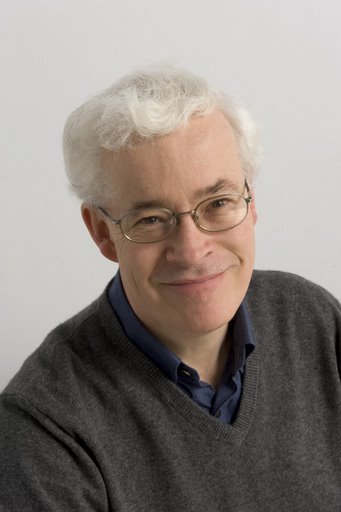
Oxford Mathematician Nick Trefethen FRS has been awarded the prestigious George Pólya Prize by the Society for Industrial and Applied Mathematics (SIAM). The Prize for Mathematical Exposition, established in 2013, is awarded every two years to an outstanding expositor of the mathematical sciences.
Thu, 27 Apr 2017
16:00 -
17:00
L3
Using ideas from statistics for analysing (spatio-temporal) stochastic processes
David Schnoerr
(University of Edinburgh)
Abstract
Many systems in nature consist of stochastically interacting agents or particles. Stochastic processes have been widely used to model such systems, yet they are notoriously difficult to analyse. In this talk I will show how ideas from statistics can be used to tackle some challenging problems in the field of stochastic processes.
In the first part, I will consider the problem of inference from experimental data for stochastic reaction-diffusion processes. I will show that multi-time distributions of such processes can be approximated by spatio-temporal Cox processes, a well-studied class of models from computational statistics. The resulting approximation allows us to naturally define an approximate likelihood, which can be efficiently optimised with respect to the kinetic parameters of the model.
In the second part, we consider more general path properties of a certain class of stochastic processes. Specifically, we consider the problem of computing first-passage times for Markov jump processes, which are used to describe systems where the spatial locations of particles can be ignored. I will show that this important class of generally intractable problems can be exactly recast in terms of a Bayesian inference problem by introducing auxiliary observations. This leads us to derive an efficient approximation scheme to compute first-passage time distributions by solving a small, closed set of ordinary differential equations.
Mon, 22 May 2017
17:00
17:00
L3
The Struggle for Algebra: English mathematics around 1660
Philip Beeley
(History Faculty)
Abstract
Part of the series "What do historians of mathematics do?"
The talk will set out the key debate in England at the Restoration, the need for a new orientation in mathematics towards algebra and the new "analysis". It will focus on efforts by three central players in England's mathematical community, John Pell, John Collins, and the Oxford mathematician John Wallis to produce an English language algebra text which would play a pioneering role in promoting this change. What was the background to the work we now call Pell's Algebra and why was it so significant?
Mon, 15 May 2017
17:00
17:00
L3
Ars sine Scientia Nihil Est: Architecture and Mathematics through history
Snezana Lawrence
(Anglia Ruskin University)
Abstract
Part of the series "What do historians of mathematics do?"
In the last year of 14th century, a French mathematician/geometer Jean Mignot, was called from Paris to help with the construction of the Cathedral of Milan. Thus was created one of the most famous stories about how mathematics literally supports great works of art, helping them stand the test of time. This talk will look at some patterns that begin to become apparent in the investigations of the relationship between architecture and mathematics and the creativity that is common to the pursuit of both. I will present the case on how this may matter to someone who is interested in the history of mathematics. To make this more intelligible, I will partly talk also of my personal journey in investigating this relationship and the issues I have researched and written about, and how these in turn changed my view of the nature of mathematics education.
Mon, 08 May 2017
17:00
17:00
L3
What is algebra?
Christopher Hollings
(Mathematical Institute)
Abstract
Part of the series "What do historians of mathematics do?"
I will address this question by turning to another: "What is algebra?" In answering this second question, and surveying the way that the answer changes as we move through the centuries, I will highlight some of the problems that face historians of mathematics when it comes to interpreting historical mathematics, and give a flavour of what it means to study the history of mathematics.
Accessibility percolation with backsteps
Berestycki, J
Brunet, É
Shi, Z
Alea (Rio de Janeiro): Latin American Journal of Probability and Mathematical Statistics
volume 14
45-62
(01 Jan 2017)
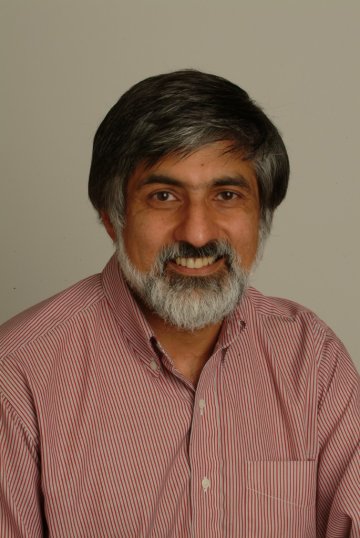
Oxford Mathematician Philip Maini has been awarded the Arthur T. Winfree Prize by the Society of Mathematical Biology for his work on mathematical modelling of spatiotemporal processes in biology and medicine. In the words of the citation Philip's work "has led to significant scientific advances not only in mathematics, but also in biology and the biomedical sciences.
Thu, 23 Feb 2017
11:00
11:00
C5
Non-reduced schemes and Zariski Geometries
Alfonso Ruiz
(Oxford)
Abstract
Using results by Eisenbud, Schoutens and Zilber I will propose a model theoretic structure that aims to capture the algebra (or geometry) of a non reduced scheme over an algebraically closed field.
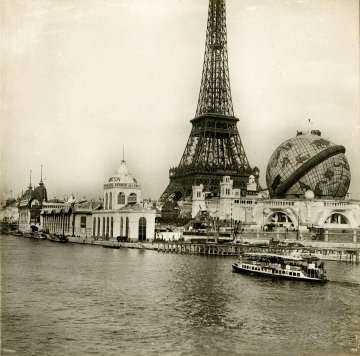
The International Congresses of Mathematicians (ICMs) take place every four years at different locations around the globe, and are the largest regular gatherings of mathematicians from all nations. However, as much as the assembled mathematicians may like to pretend that these gatherings transcend politics, they have always been coloured by world events: the congresses prior to the Second World War saw friction between French and German mathematicians, for example, whilst Cold War political tensions likewise shaped the conduct of later congresses.
Fri, 03 Mar 2017
10:00 -
11:00
L4
Predictions for Roads
Steve Hilditch
(Thales)
Abstract
Road travel is taking longer each year in the UK. This has been true for the last four years. Travel times have increased by 4% in the last two years. Applying the principle finding of the Eddington Report 2006, this change over the last two years will cost the UK economy an additional £2bn per year going forward even without further deterioration. Additional travel times are matched by a greater unreliability of travel times.
Knowing demand and road capacity, can we predict travel times?
We will look briefly at previous partial solutions and the abundance of motorway data in the UK. Can we make a breakthrough to achieve real-time predictions?