



Congratulations to Oxford Mathematicians Vicky Neale and Ursula Martin who have been nominated for Suffrage Science awards.
Mon, 15 Oct 2018
15:45
15:45
L6
Formal Moduli Problems via Partition Lie Algebras
Lukas Brantner
(Oxford University)
Abstract
If k is a field of characteristic zero, a theorem of Lurie and Pridham establishes an equivalence between formal moduli problems and differential graded Lie algebras over k. We generalise this equivalence in two different ways to arbitrary ground fields by using “partition Lie algebras”. These mysterious new gadgets are intimately related to the genuine equivariant topology of the partition complex, which allows us to access the operations acting on their homotopy groups (relying on earlier work of Dyer-Lashof, Priddy, Goerss, and Arone-B.). This is joint work with Mathew.
Tue, 09 Oct 2018
14:30
14:30
L6
Subsets of Cayley graphs that induce many edges
Oliver Janzer
(Cambridge)
Abstract
Let $G$ be a regular graph of degree $d$ and let $A\subset V(G)$. Say that $A$ is $\eta$-closed if the average degree of the subgraph induced by $A$ is at least $\eta d$. This says that if we choose a random vertex $x\in A$ and a random neighbour $y$ of $x$, then the probability that $y\in A$ is at least $\eta$. In recent joint work with Tim Gowers, we were aiming to obtain a qualitative description of closed subsets of the Cayley graph $\Gamma$ whose vertex set is $\mathbb{F}_2^{n_1}\otimes \dots \otimes \mathbb{F}_2^{n_d}$ with two vertices joined by an edge if their difference is of the form $u_1\otimes \cdots \otimes u_d$. For the matrix case (that is, when $d=2$), such a description was obtained by Khot, Minzer and Safra, a breakthrough that completed the proof of the 2-to-2 conjecture. We have formulated a conjecture for higher dimensions, and proved it in an important special case. In this talk, I will sketch this proof. Also, we have identified a statement about $\eta$-closed sets in Cayley graphs on arbitrary finite Abelian groups that implies the conjecture and can be considered as a "highly asymmetric Balog-Szemerédi-Gowers theorem" when it holds. I will present an example to show that this statement is not true for an arbitrary Cayley graph. It remains to decide whether the statement can be proved for the Cayley graph $\Gamma$.
Some model theory of Guarded Negation
Barany, V
Benedikt, M
Ten Cate, B
Journal of Symbolic Logic
volume 83
issue 4
1307-1344
(21 Dec 2018)
Query Answering with Transitive and Linear-Ordered Data
BENEDIKT, M
Amarilli, A
Bourhis, P
VANDEN BOOM, M
The Journal of Artificial Intelligence Research
(11 Oct 2018)
Tue, 23 Oct 2018
14:30 -
15:00
L5
Numerical Analysis of Implicitly Constituted Fluids: Mixed Formulations
Alexei Gazca
(Oxford)
Abstract
In the classical theory of fluid mechanics, a linear relationship between the stress and rate of strain is often assumed. Even when this relationship is non-linear, it is typically formulated in terms of an explicit relation. Implicit constitutive theories provide a theoretical framework that generalises this, allowing a, possibly multi-valued, implicit constitutive relation. Since it is not possible to solve explicitly for the stress in the constitutive relation, a more natural approach would be to include the stress as a fundamental unknown in the formulation of the problem. In this talk I will present a formulation with this feature and a proof of convergence of the finite element approximations to a solution of the original problem.
Tue, 20 Nov 2018
14:15
14:15
L4
A Beilinson-Bernstein Theorem for p-adic analytic quantum groups
Nicolas Dupre
(Cambridge)
Abstract
The celebrated localisation theorem of Beilinson-Bernstein asserts that there is an equivalence between representations of a Lie algebra and modules over the sheaf of differential operators on the corresponding flag variety. In this talk we discuss certain analogues of this result in various contexts. Namely, there is a localisation theorem for quantum groups due to Backelin and Kremnizer and, more recently, Ardakov and Wadsley also proved a localisation theorem working with certain completed enveloping algebras of p-adic Lie algebras. We then explain how to combine the ideas involved in these results to construct
a p-adic analytic quantum flag variety and a category of D-modules on it, and we show that the global section functor on these D-modules yields an equivalence of categories.
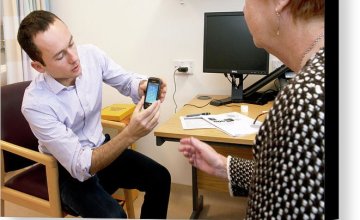
Oxford Mathematician Siddharth Arora talks about his and his colleagues' research in to using smartphone technology to anticipate the symptoms of Parkinson’s disease.
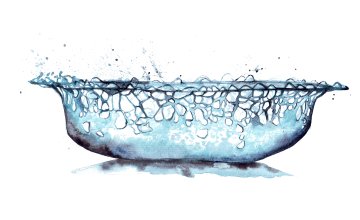
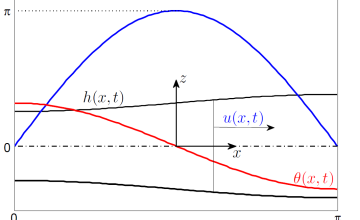
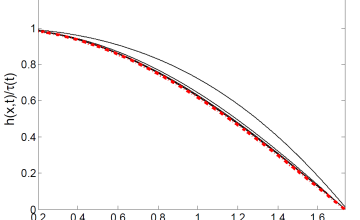
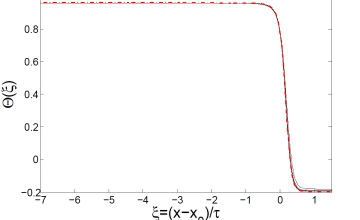
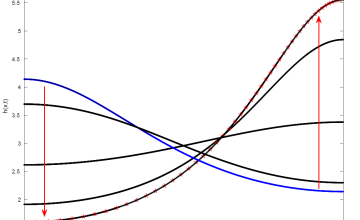
Free suspended liquid films or sheets are often formed during industrial production of sprays as well as in natural processes such as sea spray. Early experimental and theoretical investigations of them were done by French physicist Felix Savart, who observed liquid sheets forming by a jet impact on a solid surface, or by two jets impacting each other (1833), and British physicist Arthur Mason Worthington, a pioneer in investigation of the crown splash forming after impact of a drop onto a liquid surface.