


Oxford Mathematician James Grogan has won Gold for Mathematics at STEM for Britain, a poster competition and exhibition for early career researchers held at the Houses of Parliament on 13 March 2017.
Thu, 04 May 2017
16:00
16:00
L6
Joint Number Theory/Logic Seminar: On the Hilbert Property and the fundamental group of algebraic varieties
Umberto Zannier
(Scuola Normale Superiore di Pisa)
Abstract
This concerns recent work with P. Corvaja in which we relate the Hilbert Property for an algebraic variety (a kind of axiom linked with Hilbert Irreducibility, relevant e.g. for the Inverse Galois Problem) with the fundamental group of the variety.
In particular, this leads to new examples (of surfaces) of failure of the Hilbert Property. We also prove the Hilbert Property for a non-rational surface (whereas all previous examples involved rational varieties).
Thu, 25 May 2017
16:00
16:00
L6
Reduction of dynatomic curves
Holly Krieger
(Cambridge)
Abstract
Dynatomic curves parametrize n-periodic orbits of a one-parameter family of polynomial dynamical systems. These curves lack the structure of their arithmetic-geometric analogues (modular curves of level n) but can be studied dynamically. Morton and Silverman conjectured a dynamical analogue of the uniform boundedness conjecture (theorems of Mazur, Merel), asserting uniform bounds for the number of rational periodic points for such a family. I will discuss recent work towards the function field version of their conjecture, including results on the reduction mod p of dynatomic curves for the quadratic polynomial family z^2+c.
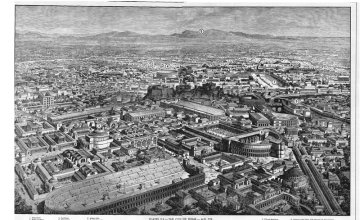
Oxford Mathematician Neave O’Clery recently moved to Oxford from the Center for International Development at Harvard University where she worked on the development of mathematical models to describe the processes behind industrial diversification and economic growth. Here she discusses how network science can help us understand the success of cities, and provide practical tools for policy-makers.
Optimized up-down asymmetry to drive fast intrinsic rotation in tokamaks
Ball, J
Parra, F
Landreman, M
Barnes, M
Nuclear Fusion
(14 Nov 2017)
doi:10.1088/1741-4326/aa9a50
Bifurcations and dynamics emergent from lattice and continuum models of
bioactive porous media
Krause, A
Beliaev, D
Gorder, R
Waters, S
International Journal of Bifurcation and Chaos
http://arxiv.org/abs/1702.08345v3
bioactive porous media
Lattice and continuum modelling of a bioactive porous tissue scaffold.
Krause, A
Beliaev, D
Van Gorder, R
Waters, S
Mathematical medicine and biology : a journal of the IMA
(10 Aug 2018)
doi:10.1093/imammb/dqy012
Fri, 09 Jun 2017
14:00 -
15:00
L3
From estimating motion to monitoring complex behaviour in cellular systems
Professor Jens Rittscher
(Dept of Engineering Science University of Oxford)
Abstract
Building on advancements in computer vision we now have an array of visual tracking methods that allow the reliable estimation of cellular motion in high-throughput settings as well as more complex biological specimens. In many cases the underlying assumptions of these methods are still not well defined and result in failures when analysing large scale experiments.
Using organotypic co-culture systems we can now mimic more physiologically relevant microenvironments in vitro. The robust analysis of cellular dynamics in such complex biological systems remains an open challenge. I will attempt to outline some of these challenges and provide some very preliminary results on analysing more complex cellular behaviours.
Fri, 16 Jun 2017
14:00 -
15:00
L2
Computational motion models for cancer imaging
Professor Julia Schnabel
(Dept of Biomedical Engineering King's College London)