

eV-Scale Sterile Neutrino Search Using Eight Years of Atmospheric Muon Neutrino Data from the IceCube Neutrino Observatory
Aartsen, M
Abbasi, R
Ackermann, M
Adams, J
Aguilar, J
Ahlers, M
Ahrens, M
Alispach, C
Amin, N
Andeen, K
Anderson, T
Ansseau, I
Anton, G
Argüelles, C
Auffenberg, J
Axani, S
Bagherpour, H
Bai, X
Balagopal, A
Barbano, A
Barwick, S
Bastian, B
Basu, V
Baum, V
Baur, S
Bay, R
Beatty, J
Becker, K
Becker Tjus, J
BenZvi, S
Berley, D
Bernardini, E
Besson, D
Binder, G
Bindig, D
Blaufuss, E
Blot, S
Bohm, C
Böser, S
Botner, O
Böttcher, J
Bourbeau, E
Bourbeau, J
Bradascio, F
Braun, J
Bron, S
Brostean-Kaiser, J
Burgman, A
Buscher, J
Busse, R
Carver, T
Chen, C
Cheung, E
Chirkin, D
Choi, S
Clark, B
Clark, K
Classen, L
Coleman, A
Collin, G
Conrad, J
Coppin, P
Correa, P
Cowen, D
Cross, R
Dave, P
De Clercq, C
DeLaunay, J
Dembinski, H
Deoskar, K
De Ridder, S
Desai, A
Desiati, P
de Vries, K
de Wasseige, G
de With, M
DeYoung, T
Dharani, S
Diaz, A
Díaz-Vélez, J
Dujmovic, H
Dunkman, M
DuVernois, M
Dvorak, E
Ehrhardt, T
Eller, P
Engel, R
Evenson, P
Fahey, S
Fazely, A
Fedynitch, A
Felde, J
Fienberg, A
Filimonov, K
Finley, C
Fox, D
Franckowiak, A
Friedman, E
Fritz, A
Gaisser, T
Gallagher, J
Ganster, E
Garrappa, S
Gerhardt, L
Glauch, T
Glüsenkamp, T
Goldschmidt, A
Gonzalez, J
Grant, D
Grégoire, T
Griffith, Z
Griswold, S
Günder, M
Gündüz, M
Haack, C
Hallgren, A
Halliday, R
Halve, L
Halzen, F
Hanson, K
Hardin, J
Haungs, A
Hauser, S
Hebecker, D
Heereman, D
Heix, P
Helbing, K
Hellauer, R
Henningsen, F
Hickford, S
Hignight, J
Hill, G
Hoffman, K
Hoffmann, R
Hoinka, T
Hokanson-Fasig, B
Hoshina, K
Huang, F
Huber, M
Huber, T
Hultqvist, K
Hünnefeld, M
Hussain, R
In, S
Iovine, N
Ishihara, A
Jansson, M
Japaridze, G
Jeong, M
Jones, B
Jonske, F
Joppe, R
Kang, D
Kang, W
Kappes, A
Kappesser, D
Karg, T
Karl, M
Karle, A
Katz, U
Kauer, M
Kellermann, M
Kelley, J
Kheirandish, A
Kim, J
Kintscher, T
Kiryluk, J
Kittler, T
Klein, S
Koirala, R
Kolanoski, H
Köpke, L
Kopper, C
Kopper, S
Koskinen, D
Koundal, P
Kowalski, M
Krings, K
Krückl, G
Kulacz, N
Kurahashi, N
Kyriacou, A
Lanfranchi, J
Larson, M
Lauber, F
Lazar, J
Leonard, K
Leszczyńska, A
Li, Y
Liu, Q
Lohfink, E
Lozano Mariscal, C
Lu, L
Lucarelli, F
Ludwig, A
Lünemann, J
Luszczak, W
Lyu, Y
Ma, W
Madsen, J
Maggi, G
Mahn, K
Makino, Y
Mallik, P
Mancina, S
Mariş, I
Maruyama, R
Mase, K
Maunu, R
McNally, F
Meagher, K
Medici, M
Medina, A
Meier, M
Meighen-Berger, S
Merz, J
Meures, T
Micallef, J
Mockler, D
Momenté, G
Montaruli, T
Moore, R
Morse, R
Moulai, M
Muth, P
Nagai, R
Naumann, U
Neer, G
Nguyen, L
Niederhausen, H
Nisa, M
Nowicki, S
Nygren, D
Obertacke Pollmann, A
Oehler, M
Olivas, A
O’Murchadha, A
O’Sullivan, E
Palczewski, T
Pandya, H
Pankova, D
Park, N
Parker, G
Paudel, E
Peiffer, P
Pérez de los Heros, C
Philippen, S
Pieloth, D
Pieper, S
Pinat, E
Pizzuto, A
Plum, M
Popovych, Y
Porcelli, A
Prado Rodriguez, M
Price, P
Przybylski, G
Raab, C
Raissi, A
Rameez, M
Rauch, L
Rawlins, K
Rea, I
Rehman, A
Reimann, R
Relethford, B
Renschler, M
Renzi, G
Resconi, E
Rhode, W
Richman, M
Riedel, B
Robertson, S
Rongen, M
Rott, C
Ruhe, T
Ryckbosch, D
Rysewyk Cantu, D
Safa, I
Sanchez Herrera, S
Sandrock, A
Sandroos, J
Santander, M
Sarkar, S
Satalecka, K
Scharf, M
Schaufel, M
Schieler, H
Schlunder, P
Schmidt, T
Schneider, A
Schneider, J
Schröder, F
Schumacher, L
Sclafani, S
Seckel, D
Seunarine, S
Shefali, S
Silva, M
Smithers, B
Snihur, R
Soedingrekso, J
Soldin, D
Song, M
Spiczak, G
Spiering, C
Stachurska, J
Stamatikos, M
Stanev, T
Stein, R
Stettner, J
Steuer, A
Stezelberger, T
Stokstad, R
Stößl, A
Strotjohann, N
Stürwald, T
Stuttard, T
Sullivan, G
Taboada, I
Tenholt, F
Ter-Antonyan, S
Terliuk, A
Tilav, S
Tollefson, K
Tomankova, L
Tönnis, C
Toscano, S
Tosi, D
Trettin, A
Tselengidou, M
Tung, C
Turcati, A
Turcotte, R
Turley, C
Ty, B
Unger, E
Unland Elorrieta, M
Usner, M
Vandenbroucke, J
Van Driessche, W
van Eijk, D
van Eijndhoven, N
Vannerom, D
van Santen, J
Verpoest, S
Vraeghe, M
Walck, C
Wallace, A
Wallraff, M
Watson, T
Weaver, C
Weindl, A
Weiss, M
Weldert, J
Wendt, C
Werthebach, J
Whelan, B
Whitehorn, N
Wiebe, K
Wiebusch, C
Williams, D
Wills, L
Wolf, M
Wood, T
Woschnagg, K
Wrede, G
Wulff, J
Xu, X
Xu, Y
Yanez, J
Yodh, G
Yoshida, S
Yuan, T
Zhang, Z
Zöcklein, M
Physical Review Letters
volume 125
issue 14
(30 Sep 2020)
doi:10.1103/physrevlett.125.141801
Searching for eV-scale sterile neutrinos with eight years of atmospheric
neutrinos at the IceCube neutrino telescope
Aartsen, M
Abbasi, R
Ackermann, M
Adams, J
Aguilar, J
Ahlers, M
Ahrens, M
Alispach, C
Amin, N
Andeen, K
Anderson, T
Ansseau, I
Anton, G
Argüelles, C
Auffenberg, J
Axani, S
Bagherpour, H
Bai, X
V, A
Barbano, A
Barwick, S
Bastian, B
Basu, V
Baum, V
Baur, S
Bay, R
Beatty, J
Becker, K
Tjus, J
BenZvi, S
Berley, D
Bernardini, E
Besson, D
Binder, G
Bindig, D
Blaufuss, E
Blot, S
Bohm, C
Böser, S
Botner, O
Böttcher, J
Bourbeau, E
Bourbeau, J
Bradascio, F
Braun, J
Bron, S
Brostean-Kaiser, J
Burgman, A
Buscher, J
Busse, R
Carver, T
Chen, C
Cheung, E
Chirkin, D
Choi, S
Clark, B
Clark, K
Classen, L
Coleman, A
Collin, G
Conrad, J
Coppin, P
Correa, P
Cowen, D
Cross, R
Dave, P
Clercq, C
DeLaunay, J
Dembinski, H
Deoskar, K
Ridder, S
Desai, A
Desiati, P
Vries, K
Wasseige, G
With, M
DeYoung, T
Dharani, S
Diaz, A
Díaz-Vélez, J
Dujmovic, H
Dunkman, M
DuVernois, M
Dvorak, E
Ehrhardt, T
Eller, P
Engel, R
Evenson, P
Fahey, S
Fazely, A
Fedynitch, A
Felde, J
Fienberg, A
Filimonov, K
Finley, C
Fox, D
Franckowiak, A
Friedman, E
Fritz, A
Gaisser, T
Gallagher, J
Ganster, E
Garrappa, S
Gerhardt, L
Glauch, T
Glüsenkamp, T
Goldschmidt, A
Gonzalez, J
Grant, D
Grégoire, T
Griffith, Z
Griswold, S
Günder, M
Gündüz, M
Haack, C
Hallgren, A
Halliday, R
Halve, L
Halzen, F
Hanson, K
Hardin, J
Haungs, A
Hauser, S
Hebecker, D
Heereman, D
Heix, P
Helbing, K
Hellauer, R
Henningsen, F
Hickford, S
Hignight, J
Hill, G
Hoffman, K
Hoffmann, R
Hoinka, T
Hokanson-Fasig, B
Hoshina, K
Huang, F
Huber, M
Huber, T
Hultqvist, K
Hünnefeld, M
Hussain, R
In, S
Iovine, N
Ishihara, A
Jansson, M
Japaridze, G
Jeong, M
Jones, B
Jonske, F
Joppe, R
Kang, D
Kang, W
Kappes, A
Kappesser, D
Karg, T
Karl, M
Karle, A
Katz, U
Kauer, M
Kellermann, M
Kelley, J
Kheirandish, A
Kim, J
Kintscher, T
Kiryluk, J
Kittler, T
Klein, S
Koirala, R
Kolanoski, H
Köpke, L
Kopper, C
Kopper, S
Koskinen, D
Koundal, P
Kowalski, M
Krings, K
Krückl, G
Kulacz, N
Kurahashi, N
Kyriacou, A
Lanfranchi, J
Larson, M
Lauber, F
Lazar, J
Leonard, K
Leszczyńska, A
Li, Y
Liu, Q
Lohfink, E
Mariscal, C
Lu, L
Lucarelli, F
Ludwig, A
Lünemann, J
Luszczak, W
Lyu, Y
Ma, W
Madsen, J
Maggi, G
Mahn, K
Makino, Y
Mallik, P
Mancina, S
Mariş, I
Maruyama, R
Mase, K
Maunu, R
McNally, F
Meagher, K
Medici, M
Medina, A
Meier, M
Meighen-Berger, S
Merz, J
Meures, T
Micallef, J
Mockler, D
Momenté, G
Montaruli, T
Moore, R
Morse, R
Moulai, M
Muth, P
Nagai, R
Naumann, U
Neer, G
Nguyen, L
Niederhausen, H
Nisa, M
Nowicki, S
Nygren, D
Pollmann, A
Oehler, M
Olivas, A
O'Murchadha, A
O'Sullivan, E
Palczewski, T
Pandya, H
Pankova, D
Park, N
Parker, G
Paudel, E
Peiffer, P
Heros, C
Philippen, S
Pieloth, D
Pieper, S
Pinat, E
Pizzuto, A
Plum, M
Popovych, Y
Porcelli, A
Rodriguez, M
Price, P
Przybylski, G
Raab, C
Raissi, A
Rameez, M
Rauch, L
Rawlins, K
Rea, I
Rehman, A
Reimann, R
Relethford, B
Renschler, M
Renzi, G
Resconi, E
Rhode, W
Richman, M
Riedel, B
Robertson, S
Rongen, M
Rott, C
Ruhe, T
Ryckbosch, D
Cantu, D
Safa, I
Herrera, S
Sandrock, A
Sandroos, J
Santander, M
Sarkar, S
Satalecka, K
Scharf, M
Schaufel, M
Schieler, H
Schlunder, P
Schmidt, T
Schneider, A
Schneider, J
Schröder, F
Schumacher, L
Sclafani, S
Seckel, D
Seunarine, S
Shefali, S
Silva, M
Smithers, B
Snihur, R
Soedingrekso, J
Soldin, D
Song, M
Spiczak, G
Spiering, C
Stachurska, J
Stamatikos, M
Stanev, T
Stein, R
Stettner, J
Steuer, A
Stezelberger, T
Stokstad, R
Stößl, A
Strotjohann, N
Stürwald, T
Stuttard, T
Sullivan, G
Taboada, I
Tenholt, F
Ter-Antonyan, S
Terliuk, A
Tilav, S
Tollefson, K
Tomankova, L
Tönnis, C
Toscano, S
Tosi, D
Trettin, A
Tselengidou, M
Tung, C
Turcati, A
Turcotte, R
Turley, C
Ty, B
Unger, E
Elorrieta, M
Usner, M
Vandenbroucke, J
Driessche, W
Eijk, D
Eijndhoven, N
Vannerom, D
Santen, J
Verpoest, S
Vraeghe, M
Walck, C
Wallace, A
Wallraff, M
Watson, T
Weaver, C
Weindl, A
Weiss, M
Weldert, J
Wendt, C
Werthebach, J
Whelan, B
Whitehorn, N
Wiebe, K
Wiebusch, C
Williams, D
Wills, L
Wolf, M
Wood, T
Woschnagg, K
Wrede, G
Wulff, J
Xu, X
Xu, Y
Yanez, J
Yodh, G
Yoshida, S
Yuan, T
Zhang, Z
Zöcklein, M
Physical Review D: Particles, Fields, Gravitation and Cosmology
volume 102
issue 5
(30 Sep 2020)
doi:10.1103/PhysRevD.102.052009
Generating collection queries from proofs.
Benedikt, M
Pradic, P
CoRR
volume abs/2005.06503
(01 Jan 2020)
Carathéodory Sampling for Stochastic Gradient Descent
Cosentino, F
Oberhauser, H
Abate, A
(25 Nov 2020)
doi:10.48550/arXiv.2006.01819
A randomized algorithm to reduce the support of discrete measures
Cosentino, F
Oberhauser, H
Abate, A
Advances in Neural Information Processing Systems 33 (NeurIPS 2020)
volume 19
15100-15110
(01 Jul 2021)
Carathéodory Sampling for Stochastic Gradient Descent
Cosentino, F
Oberhauser, H
Abate, A
(25 Nov 2020)
doi:10.48550/arXiv.2006.01819
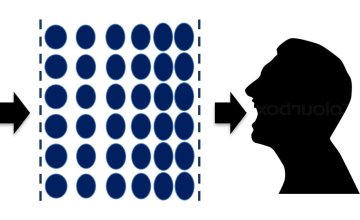
How do we design face masks that efficiently remove contaminants while ensuring that we can still breathe easily? One complicating factor with this question is the fact that the properties of the material that we start off with for our face mask can be very different when in use. A key example is seen when you stretch the mask around your face to put it on. In doing so, you also stretch the pores, i.e., the holes in the material that allow the air to pass through.
Access Device Methods of Using the Same
TURNEY, B
Harrah, T
Long, J
Williams, J
WATERS, S
MOULTON, D
Pereira, P
Nodiff, A
Wong, E
DeGraff, K
Hera, M
Donatelli, D
Rauniyar, N
Graves, M
The effect of compressibility on the behaviour of filter media
Kory, J
Krupp, A
Please, C
Griffiths, I
IMA Journal of Applied Mathematics
volume 85
issue 4
564-583
(07 Jul 2020)
doi:10.1093/imamat/hxaa018
Thu, 18 Jun 2020
16:00 -
17:00
Deep Neural Networks for Optimal Execution
LAURA LEAL
(Princeton)
Abstract
Abstract: We use a deep neural network to generate controllers for optimal trading on high frequency data. For the first time, a neural network learns the mapping between the preferences of the trader, i.e. risk aversion parameters, and the optimal controls. An important challenge in learning this mapping is that in intraday trading, trader's actions influence price dynamics in closed loop via the market impact. The exploration--exploitation tradeoff generated by the efficient execution is addressed by tuning the trader's preferences to ensure long enough trajectories are produced during the learning phase. The issue of scarcity of financial data is solved by transfer learning: the neural network is first trained on trajectories generated thanks to a Monte-Carlo scheme, leading to a good initialization before training on historical trajectories. Moreover, to answer to genuine requests of financial regulators on the explainability of machine learning generated controls, we project the obtained ``blackbox controls'' on the space usually spanned by the closed-form solution of the stylized optimal trading problem, leading to a transparent structure. For more realistic loss functions that have no closed-form solution, we show that the average distance between the generated controls and their explainable version remains small. This opens the door to the acceptance of ML-generated controls by financial regulators.