

Tue, 26 Nov 2019
14:15
L4

Heisenberg groups and graded Lie algebras

Beth Romano
(Oxford University)
Abstract

I will talk about a way of building graded Lie algebras from certain Heisenberg groups. The input for this construction arises naturally when studying families of algebraic curves, and we'll look at some examples in which Lie theory interacts with number theory in an illuminating way. 
Decomposing the parameter space of biological networks via a numerical discriminant approach
Harrington, H Mehta, D Byrne, H Hauenstein, J MC 2019: Maple in Mathematics Education and Research 114-131 (28 Feb 2020) doi:10.1007/978-3-030-41258-6_9
Mon, 09 Dec 2019

15:45 - 16:45
L3

Ito-Wentzell-Lions formula for measure dependent random fields under full and conditional measure flows

GONCALO DOS REIS
(University of Edinburgh)
Abstract


We present several Itô-Wentzell formulae on Wiener spaces for real-valued functionals random field of Itô type depending on measures. We distinguish the full- and marginal-measure flow cases. Derivatives with respect to the measure components are understood in the sense of Lions.
This talk is based on joint work with V. Platonov (U. of Edinburgh), see https://arxiv.org/abs/1910.01892.
 

Mon, 09 Dec 2019

14:15 - 15:45
L3

Low-dimensional quantum Yang-Mills measures

ILYA CHEVYREV
(University of Oxford)
Abstract

Yang-Mills theory plays an important role in the Standard Model and is behind many mathematical developments in geometric analysis. In this talk, I will present several recent results on the problem of constructing quantum Yang-Mills measures in 2 and 3 dimensions. I will particularly speak about a representation of the 2D measure as a random distributional connection and as the invariant measure of a Markov process arising from stochastic quantisation. I will also discuss the relationship with previous constructions of Driver, Sengupta, and Lévy based on random holonomies, and the difficulties in passing from 2 to 3 dimensions. Partly based on joint work with Ajay Chandra, Martin Hairer, and Hao Shen.

Mon, 02 Dec 2019

14:15 - 15:15
L3

Asset Prices in Segmented and Integrated Markets

PAOLO GUASONI
(University of Dublin)
Abstract

This paper evaluates the effect of market integration on prices and welfare, in a model where two Lucas trees grow in separate regions with similar investors. We find equilibrium asset price dynamics and welfare both in segmentation, when each region holds its own asset and consumes its dividend, and in integration, when both regions trade both assets and consume both dividends. Integration always increases welfare. Asset prices may increase or decrease, depending on the time of integration, but decrease on average. Correlation in assets' returns is zero or negative before integration, but significantly positive afterwards, explaining some effects commonly associated with financialization.

Boundary layers in Helmholtz flows
Moore, M Cimpeanu, R Ockendon, H Ockendon Oliver, J Journal of Fluid Mechanics volume 882 (11 Nov 2019) doi:10.1017/jfm.2019.832
Boundary layers in Helmholtz flows
Moore, M Cimpeanu, R Ockendon, H Ockendon Oliver, J Journal of Fluid Mechanics volume 882 (11 Nov 2019) doi:10.1017/jfm.2019.832
epiflows: an R package for risk assessment of travel-related spread of disease.
Moraga, P Dorigatti, I Kamvar, Z Piatkowski, P Nagraj, V Donnelly, C Jombart, T F1000Research volume 7 (31 Aug 2018) doi:10.12688/f1000research.16032.3

Oxford Mathematician Nils Matthes talks about trying to understand old numbers using new techniques.

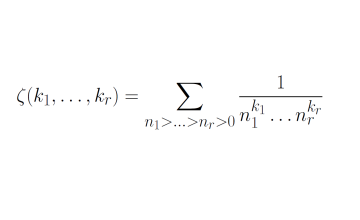
"The Riemann zeta function is arguably one of the most important objects in arithmetic. It encodes deep information about the whole numbers; for example the celebrated Riemann hypothesis, which gives a precise location of its zeros, predicts deep information about the prime numbers. In my research, I am mostly interested in the special values of the Riemann zeta function at integers $k\geq 2$,

Finite open-world query answering with number restrictions
Amarilli, A Benedikt, M ACM Transactions on Computational Logic volume 21 issue 4 (05 Jul 2020) doi:10.1145/3365834
Subscribe to